
The Indo-Pacific Command (INDOPACOM) region presents a complex and dynamic security environment, characterized by vast maritime expanses and escalating strategic competition. As the United States and its allies face near-peer challenges, advanced capabilities are required to maintain stability, deter aggression, and enable Multi-Domain Operations (MDO). MAG is strategically positioned to support these objectives, providing critical defense technology and expertise to enhance battlespace awareness and operational effectiveness throughout the theater.
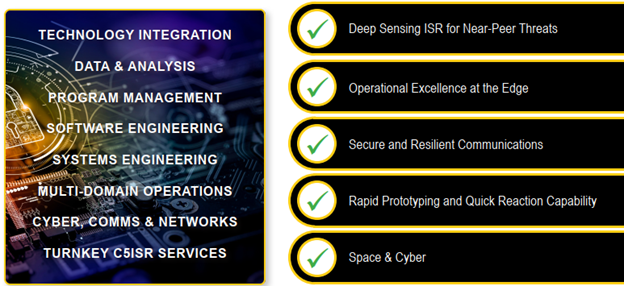
As a leading defense technology solutions provider, our focus is on delivering comprehensive INDOPACOM solutions that address the specific challenges posed by emerging threats. Through a combination of cutting-edge C5ISR (Command, Control, Communications, Computers, Cyber, Intelligence, Surveillance, and Reconnaissance) systems, strategic partnerships, and a deep understanding of the operational domain, we empower our customers and partners to secure their interests.
The Strategic Importance of INDOPACOM
The INDOPACOM region is home to more than half the world’s population, several of the largest economies, and the world’s busiest sea lanes. The U.S. National Defense Strategy identifies the area as its priority theater, emphasizing the need to uphold a free and open Indo-Pacific.
This objective requires a persistent, forward-deployed presence and technological superiority. Furthermore, countering near-peer competitors requires the ability to operate effectively in potential Anti-Access/Area Denial (A2/AD) environments, demanding resilient communications and sophisticated A2/AD ISR solutions.
The “Tyranny of Distance” Called. We Answered.
Beyond the technological competition, the sheer scale of the Indo-Pacific presents a logistical challenge often termed the “Tyranny of Distance.” Operating effectively requires systems capable of extended range and the infrastructure to support them far from established bases—a core tenet of concepts like Agile Combat Employment (ACE).
MAG directly addresses this challenge. Our expertise in Global logistics services and austere environment aviation support ensures that our solutions remain operational where they are needed most. We specialize in support at the Tactical Edge, providing not just platforms and sensors, but the necessary communications, data transport, and maintenance support to maintain readiness and uptime in environments facing contested logistics and communications challenges.
Our Specialized Defense Technology Portfolio
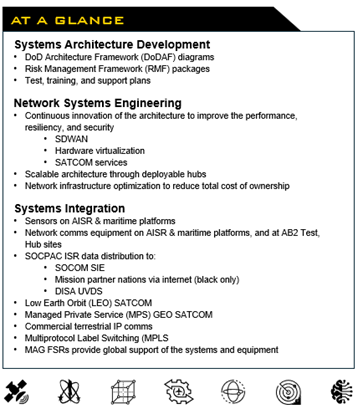 MAG’s effectiveness in INDOPACOM stems from our ability to rapidly deploy and sustain cutting-edge defense technology tailored to the region’s unique challenges. Our portfolio is built to counter sophisticated threats by leveraging dual-use technology to create a persistent solutions customers require, supported by secure, interoperable data links and communications nodes.
Manned and Unmanned Airborne ISR Operations
A core component of our offering is our expertise as a defense technology partner integrating, implementing, operating, maintaining, and training on a portfolio of dual-use defense technology, which includes manned airborne ISR contractor and provider of support worldwide. We deploy a diverse set of turn-key, interoperable solutions, often utilizing flexible models like COCO ISR (Contractor Owned Contractor Operated) services that give us the flexibility to provide the latest technology at the tactical edge without our customer’s subsidizing the development costs.
These solutions, including long-range, deep-sensing capabilities, are customized with mission-specific sensor, communications, and AI/ML packages. We specialize in the integration of sensors crucial for the maritime environment in all domains, including SAR/MTI integration (Synthetic Aperture Radar/Moving Target Indicator) for all-weather tracking, high-definition EO/IR sensor integration, and specialized Airborne SIGINT solutions as well as Electronic Warfare (EW) suites to detect and locate adversary emissions. This capability is crucial for enhancing Maritime Domain Awareness (MDA) solutions in the most critical areas of the world.
Case Study: Going the Distance in INDOPACOM
The operational demands of the INDOPACOM theater drove a paradigm shift in airborne ISR by utilizing a High-Altitude ISR Jet to create a strategic advantage. MAG is leading this evolution by revolutionizing ISR capabilities with platforms like the Bombardier Global 6500. Yes, it is a business jet. It has great legroom. And even better Line-of-Sight.
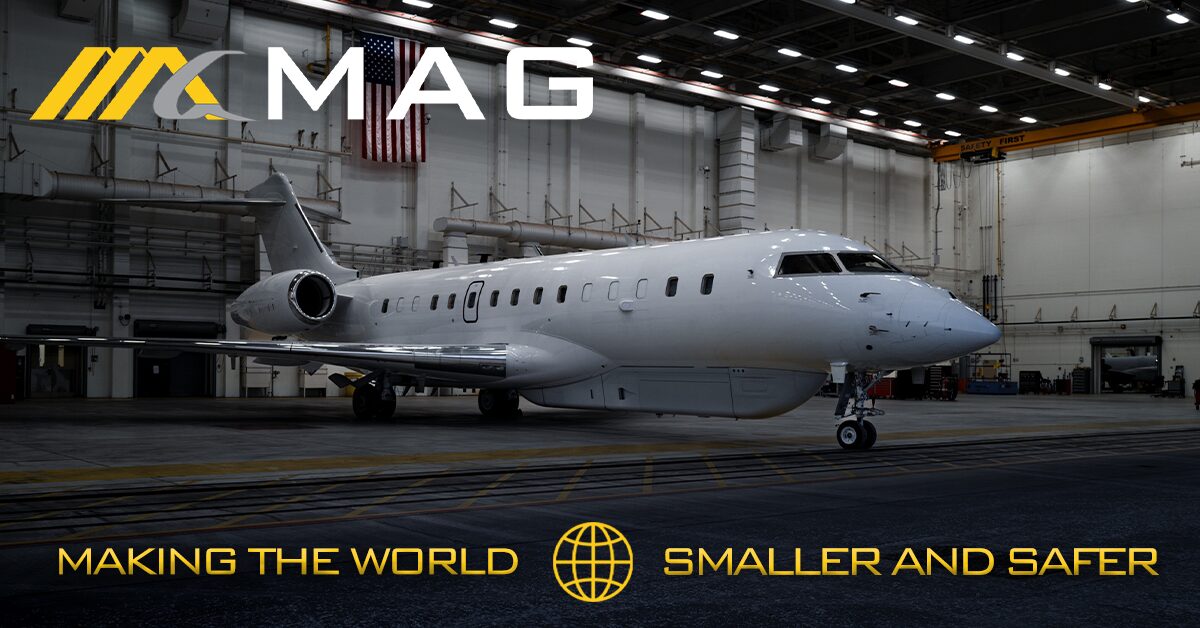
This platform moves beyond limitations of traditional turboprop assets, offering significant advantages for the Pacific theater:
- Extended Range and Speed: The Global 6500’s exceptional endurance (15+ hours) and higher transit speeds allow it to cover vast maritime expanses rapidly and self-deploy globally, directly addressing the “Tyranny of Distance.”
- Enhanced Survivability and Deep Sensing: Operating at altitudes above 45,000 feet provides superior sensor line-of-sight, allowing for crucial “deep sensing” while keeping the platform above many integrated air defense threats and weather systems.
- Proven Integration Expertise: As the prime contractor for critical pathfinder programs utilizing this platform, such as the U.S. Army’s ATHENA-R program (Army Theater-Level, High-Altitude Expeditionary Next Airborne ISR-Radar), MAG possesses proven expertise in special mission aircraft modification. We have experience integrating sophisticated, multi-INT sensor packages, including advanced SAR/MTI radar integration and robust solutions that deal with all forms of transmission in the signals’ environment.
Advanced C5ISR Integration and Data Transport
Collecting data is only the first step. Through our specialized C5ISR integration services, we ensure all sensor data is processed, analyzed, and disseminated securely at the speed of relevance to achieve decision dominance.
MAG excels in Advanced PED (Processing, Exploitation, and Dissemination), leveraging multi-INT data fusion and AI-enabled intelligence analysis to transform raw data into actionable intelligence rapidly.
Crucially, in contested or communications-denied (A2/AD) environments, centralized PED may not be viable. MAG addresses this by integrating advanced Edge Processing capabilities. By processing data onboard, the aircraft using Automated Target Recognition (ATR) solutions, we reduce reliance on vulnerable data links and significantly speed up the “sensor-to-shooter integration” timeline at the tactical edge.
Furthermore, our systems are designed for interoperability, a cornerstone of the DoD’s CJADC2 integration capabilities (Combined Joint All-Domain Command and Control) strategy. We enable seamless information sharing between U.S. forces and regional partners, multiplying the effectiveness of allied operations and creating a unified common operating picture.
System and Sensor Agnostic Modernization
In addition, our defense technology solutions emphasize system agnostic C5ISR integration. This means we can upgrade and modernize a wide range of existing platforms (airborne, maritime, land, cyber) and systems. We can rapidly integrate, deploy and sustain solutions in austere environments faster than the traditional large defense primes. We focus heavily on integrating the best available technology in the most suitable, timely manner. This integrated approach allows government, international, and commercial customers to procure a complete capability package from a single vendor, simplifying acquisition and ensuring mission coherence.
This flexibility is crucial for regional allies. By providing system modification and modernizing existing assets with state-of-the-art C5ISR suites—utilizing MOSA (Modular Open Systems Approach) compliant defense standards—we provide a cost-effective path to enhanced capability. MAG’s central value proposition and “technology agnostic” approach, which prioritizes the mission requirement over any single proprietary system, allows us to integrate the most effective technology for a given task. This flexibility is a key differentiator from the traditional defense prime approach that incentivizes companies to promote their own hardware solutions rather than focus on the right solution.
The MAG Difference: Because Threats Don’t Wait for Procurement Cycles
In the rapidly evolving INDOPACOM theater, the pace of technological advancement demands acquisition cycles faster than traditional defense procurement. Agility is paramount.
MAG provides a distinct advantage through our specialization in Quick Reaction Capability (QRC) integration and rapid prototyping approach. Our vertically integrated model allows us to take a requirement from concept to operational deployment faster. By managing the platform, the integration engineering (adhering to MOSA compliance defense standards via our CMMI Level 3 and ASO 9100D certifications, the operations, and the sustainment under one roof, enables us to deliver turnkey solutions without bureaucratic latency.
Building Strength Through Strategic Partnerships
No single organization can address INDOPACOM’s security challenges alone. MAG’s approach prioritizes long-term cooperation with the Department of War, allied nations, and technology partners, including support for critical initiatives like AUKUS technology integration. Our commitment to Five Eyes (FVEY) C5ISR integration ensures that our solutions are built for coalition operations from the ground up. We facilitate interoperability within the Mission Partner Environment (MPE), sharing expertise, supporting training, and enabling partners to take full advantage of new systems.
We actively support Building Friendly Foreign Partner Capacity initiatives and facilitate FMS ISR solutions (Foreign Military Sales). Our role includes sharing expertise, providing specialized ISR mission training services, and enabling partners to take full advantage of new systems.
We recognize that every partner brings its own strengths and faces unique constraints. That’s why we work to ensure tools and solutions are practical—adapted to actual operational needs and built to endure changing circumstances. By supporting the development of sovereign capabilities with regional allies, we contribute to a compatible, networked defense that can respond more flexibly to a range of security concerns.
Looking to the Future
MAG’s involvement in the Indo-Pacific is grounded in problem-solving and shared commitment. We see our work as an ongoing partnership, one that supports U.S. defense priorities and strengthens the region’s ability to manage current and future risks.
Through advanced defense technology, regional cooperation, and continuous improvement, MAG aims to support a secure and stable Indo-Pacific. Our contributions are shaped by a practical understanding of the challenges ahead—and a readiness to stand beside our partners as those challenges evolve.
Frequently Asked Questions (FAQ) About MAG’s INDOPACOM Defense Technology Strategy
Q: How do vast distances in the Indo-Pacific Region present a significant DDIL (Denied, Degraded, Intermittent, or Limited) challenge for operational forces in the areas of Domain Awareness, Command and Control (C2) and Joint Fires? How do MAG’s Tactical Network Communications offerings provide secure and reliable data transport at the Tactical Edge? A: Airborne, Maritime and Ground Units at the Tactical Edge can expect communication pathway interference as the maneuver around highly dispersed, island-to-island, INDOPACOM Region. Operations are marginalized due to limitations around data access, classification, and encryption challenges. The combined-joint force has become predictable about their communications transport preferences. To counter that, MAG has created a proven portfolio of capabilities to develop and implement satellite and terrestrial based networks, transports, and processing nodes to support Theater SOF Air Strike, ISR, PED, and other mission sets using existing commercial infrastructure where available. We provide premier, multi-intelligence communications solutions to disseminate intelligence data between airborne, maritime, and ground stations in near real-time. MAG’s defense technology solutions include Multi-Orbit SATCOM resilient communications architecture for fixed wing and unmanned ISR&T missions anywhere in the world, and tailorable to unique mission sets including at-the-halt and on-the-move operations. Edge computing leveraging leading AI/ML Multi-INT solutions to enable units isolated from a C2 perspective to generate their own targets and avoid being “out of the fight” for extended periods of time. Our defense solutions portfolio includes successful design, integration, and commissioning of seventeen (17) remote and split operations centers for the integration and presentation of time sensitive actionable intelligence. MAG’s in-house ISR&T Center of Excellence is used to train Combined-Joint Forces and develop innovative TTPs leveraging emerging technology for distributed multi-domain operations.
Q: Why is the defense sector shifting from turboprops to business jets for ISR in INDOPACOM? A: The shift to platforms like the Global 6500 is driven by operational requirements. Business jets offer superior speed, range, and altitude. This allows them to cover vast distances faster, operate above many air defense threats (enhancing survivability), and provide greater sensor line-of-sight for deep sensing missions in contested (A2/AD) environments.
Q: What are the biggest C5ISR challenges in the INDOPACOM region? A: The primary challenges are the “Tyranny of Distance,” which demands long-range persistent ISR and robust logistics, and operating in Anti-Access/Area Denial (A2/AD) environments. This requires resilient communications, sophisticated sensor technology (like SIGINT and SAR/MTI), and rapid data processing (Edge Processing) to maintain decision superiority.
Q: How does MAG Aerospace support CJADC2 in the Pacific? A: MAG supports Combined Joint All-Domain Command and Control (JADC2) by providing platform-agnostic C5ISR integration services. We focus on open architecture (MOSA/SOSA), advanced PED, and Multi-INT data fusion to ensure seamless interoperability between U.S. forces and regional allies, connecting sensors across all domains.
Q: What is COCO model and why is it so relevant today? A: COCO (Contractor Owned Contractor Operated) is a “Solution as a Service” model. It allows U.S. and allied forces to rapidly field advanced defense technology and specialized capabilities without the long lead times and heavy logistical footprint of traditional procurement- that is also more aligned with customer funding streams that minimizes large upfront payment for system development. This, along with the ability for contractors to rapidly configure new technology on contractor systems givens INDOPACOM and others the agility that is crucial in the ever-changing threat landscape.
Ready to enhance your C5ISR capabilities in the Indo-Pacific? Contact MAG today to learn how our specialized defense technology solutions and C5ISR integration expertise can support your mission.
