
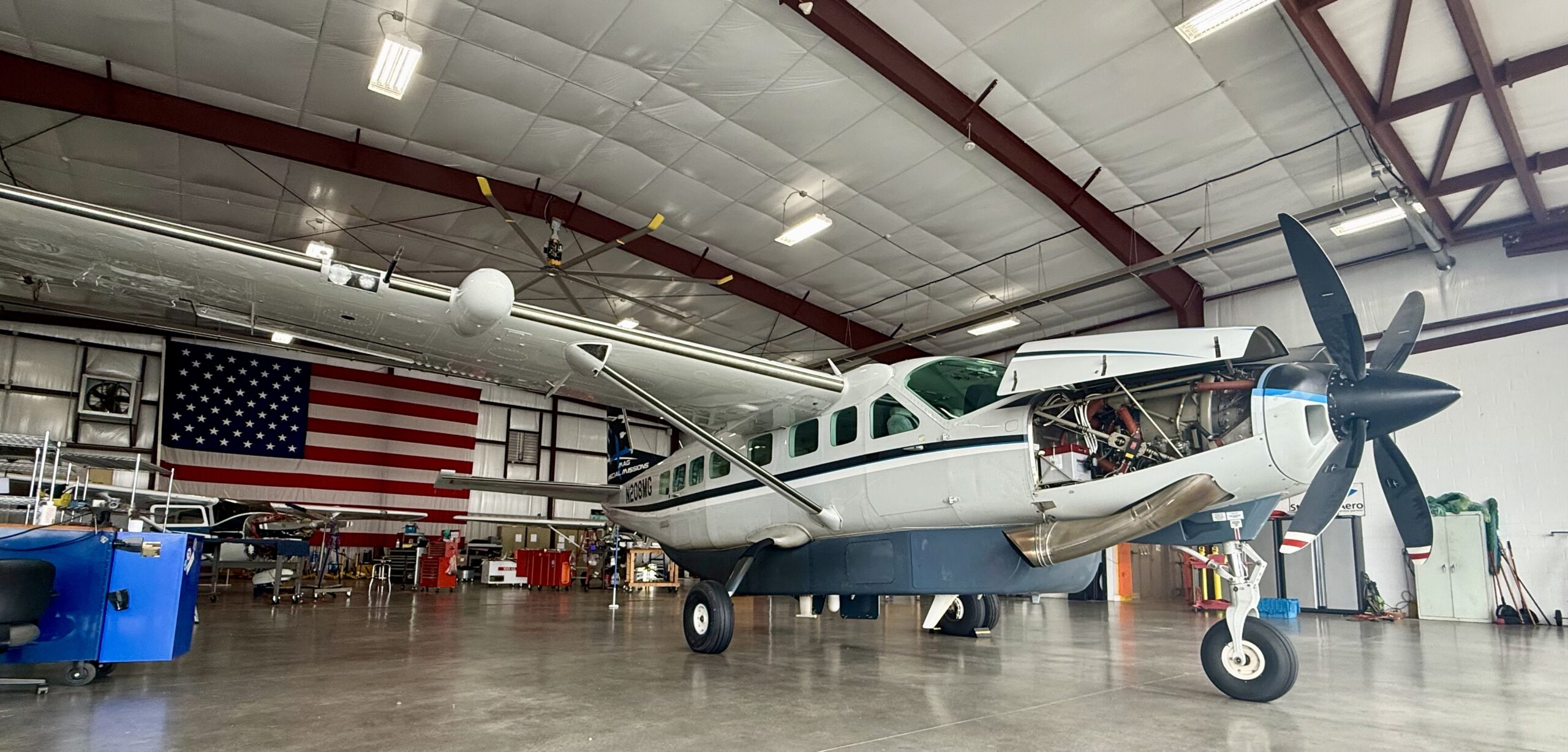
Located at the Raleigh Executive Jetport (KTTA), MAG’s Sanford Aircraft Maintenance Facility plays a pivotal role in ensuring mission readiness for Special Missions Training (SMT) aircraft while also serving as a trusted resource for the broader general aviation community. The facility is central to MAG’s ability to sustain aircraft availability for vital training programs supporting Joint Terminal Attack Controllers (JTAC) and other mission partners nationwide. At the same time, the Sanford team leverages its expertise to provide high-quality maintenance services to aircraft owners across the country, making the site a key asset that bridges national defense readiness with the evolving needs of civilian aviation.
To provide immediate context on the macroeconomic, military, and civilian aviation landscapes shaping the modern maintenance, repair, and overhaul (MRO) industry, the following metrics highlight the critical need for advanced Federal Aviation Administration (FAA) certificated Part 145 repair facilities:
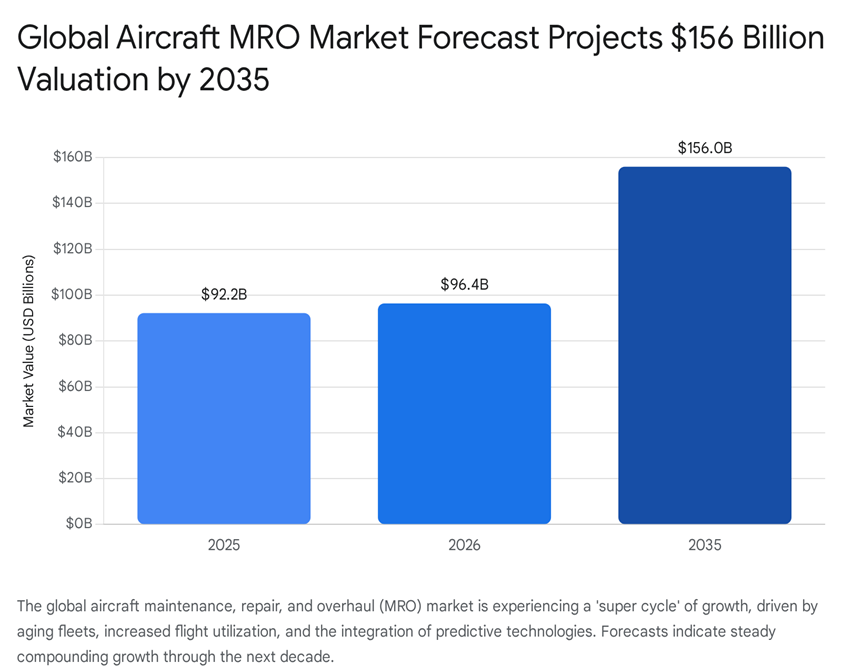
- Global MRO Market Expansion: The global aircraft MRO market reached an estimated $92.21 billion to $92.23 billion in 2025 and is projected to expand to between $151.64 billion and $156 billion by 2035, reflecting a compound annual growth rate (CAGR) of up to 5.1%.
- Military Readiness Deficits: The United States Air Force (USAF) overall mission-capable (MC) rate declined to 67.15% in 2024, down from 69.92% in 2023 and 71.24% in 2022, underscoring severe capacity constraints and the growing reliance on contracted maintenance support.
- Business Jet Market Surge: Driven by increased utilization and fractional ownership, 8,500 new business jets valued at $283 billion are forecast for delivery over the next decade, exacerbating the demand for specialized civilian MRO services.
- Labor Force Constraints: The aviation maintenance sector faces a critical personnel shortfall, with industry projections indicating a global requirement for 716,000 new technicians by 2043 to replace retiring workers and service growing commercial, corporate, and military fleets.
- Local Economic Impact: Specialized regional facilities, such as the Raleigh Executive Jetport (KTTA) in North Carolina, serve as substantial economic engines, contributing $104.2 million annually to the local economy and supporting 530 regional jobs.
- Predictive Maintenance Savings: Full adoption of condition monitoring and artificial intelligence (AI)-driven predictive maintenance is estimated to save Fortune 500 companies 2.1 million hours of downtime and $233 billion in maintenance costs annually.
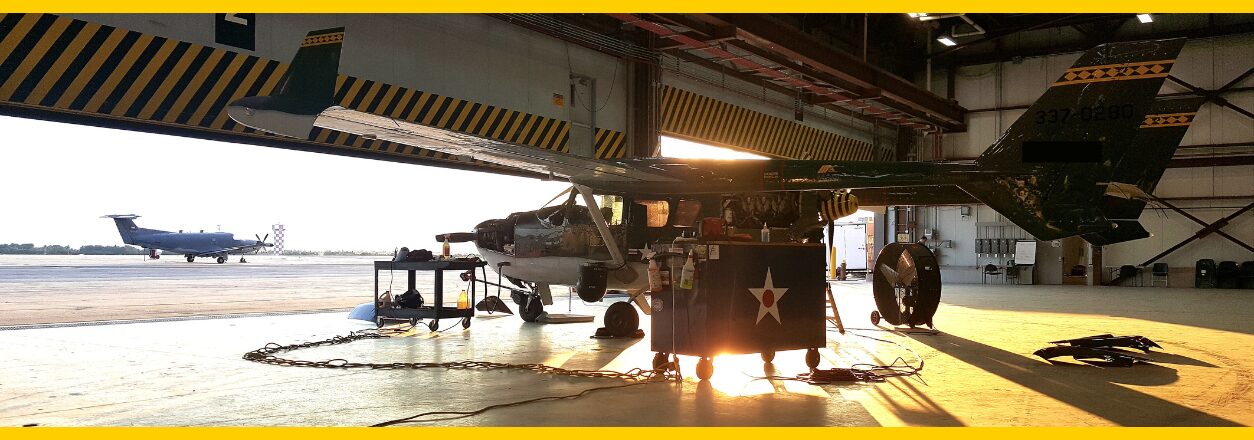
Introduction: The Dual Mandate of Modern Aviation Sustainment
In the highly regulated and rapidly evolving aerospace sector, the operational availability, dispatch reliability, and baseline safety of an aircraft are paramount metrics of success. Whether facilitating national defense objectives through Special Missions Training (SMT) or enabling corporate mobility via business aviation, operational readiness hinges entirely on the proficiency of the underlying maintenance infrastructure. At the nucleus of this infrastructure are FAA-certificated 14 CFR Part 145 repair stations. These elite facilities represent the apex of aviation maintenance, repair, and overhaul (MRO), operating under rigorous quality control standards, highly structured safety protocols, and intense regulatory oversight to ensure the continued airworthiness of increasingly complex airframes, powerplants, and digital avionics systems.
The contemporary aviation landscape is currently navigating a unique convergence of structural and macroeconomic challenges. On one side of the operational spectrum, military operators are grappling with severely aging fleets, protracted supply chain disruptions, and plummeting mission-capable rates. These constraints have necessitated a strategic pivot toward outsourcing specialized training, adversary simulation, and maintenance support to private defense contractors. On the other side of the spectrum, the business and general aviation sectors are experiencing unprecedented, sustained growth. Climbing flight hours, expanding fractional ownership models, and record-setting new aircraft deliveries are collectively straining the existing civilian MRO capacity, leading to severe bottlenecks at original equipment manufacturer (OEM) service centers.
Addressing this dual mandate requires a sophisticated, highly adaptable approach to aircraft sustainment—a strategy formally recognized within the defense sector as Multi-Domain Operations. Strategic MRO facilities, such as MAG’s Part 145 operation located at the Raleigh Executive Jetport (KTTA) in Sanford, North Carolina, exemplify this integrated model. By co-locating military contract support with general aviation and business jet services, these agile repair stations serve as a critical bridge. They simultaneously sustain national defense readiness while alleviating the capacity constraints of civilian aviation.
The Macroeconomic MRO Landscape: Growth Amidst Structural Constraints
The global aviation aftermarket is undergoing a profound and accelerating transformation. Characterized by a generational “super cycle” of demand, the MRO sector is expanding rapidly as commercial, military, and corporate operators seek to maximize the structural lifespan of existing assets while concurrently integrating next-generation digital technologies into legacy airframes.
Market Valuation, Growth Projections, and Regional Dynamics
In 2025, the global aircraft MRO market achieved a valuation of approximately $92.21 billion to $92.23 billion, effectively surpassing pre-pandemic operational peaks by a margin of 12%. Industry forecasts project this figure to expand dramatically, reaching between $151.64 billion and $156.0 billion by the end of the forecast period in 2035. This growth trajectory, expanding at a compound annual growth rate (CAGR) ranging from 2.7% to 5.1% depending on the specific sub-segment, is primarily driven by the progressive aging of the global fleet.
In 2025, the average age of the global commercial airliner fleet rose to 13.4 years, a notable increase from 12.1 years in 2024. Older aircraft inherently require significantly more frequent, labor-intensive maintenance interventions, including heavy structural checks (D-checks), major engine overhauls, and unscheduled repairs due to unexpected durability issues.
Regionally, North America remains the dominant force in the global MRO landscape, holding a 37.65% market share in 2024. The North American market is projected to grow from an estimated $28 billion in 2025 to over $34 billion by 2035. The United States leads this regional dominance, supported by the presence of massive commercial carrier fleets, expansive military and defense operations, and the world’s largest concentration of privately owned business jets, which alone account for 73.8% of the global business aviation market. Conversely, the Asia-Pacific region represents the fastest-growing geographical market, with an anticipated CAGR of 6.04% through 2030, driven by the rapid expansion of regional low-cost carriers, increased defense spending, and a burgeoning middle class driving passenger traffic.
Supply Chain Fragility, Aircraft Backlogs, and Labor Shortages
Despite highly robust revenue projections, the MRO industry is currently navigating severe structural headwinds. Aircraft manufacturing and production have consistently fallen short of global demand since peaking in 2018. By the end of 2024, the aerospace sector produced nearly 30% fewer aircraft than it did six years prior, leading to a massive, multi-year backlog of over 17,000 unfilled narrow-body and wide-body aircraft orders. Consequently, operators across all domains are forced to fly their existing assets longer and harder to meet capacity demands. Global aircraft utilization is projected to exceed 112 million flight hours annually by 2035, a staggering 39% increase from 2024 levels.
This increased utilization strains a deeply fragile supply chain that is already heavily impacted by raw material shortages, unpredictable global trade dynamics, and geopolitical volatility. The industry is currently battling “vanishing vendor” syndrome—a scenario where original equipment manufacturers cease the production of critical legacy components, leaving operators scrambling to reverse-engineer parts or harvest spares from decommissioned airframes.
Compounding the parts shortage is a severe, systemic labor deficit that threatens the industry’s baseline capacity to execute required maintenance. The ongoing retirement of the baby boomer generation has triggered a massive drain of institutional knowledge and highly skilled technicians.
Boeing’s pilot and technician outlook estimates that the global aviation sector will require an influx of 716,000 new maintenance technicians by 2043 simply to keep pace with demand and replace retiring personnel. To mitigate this shortfall, industry associations like the National Business Aviation Association (NBAA) are intensifying workforce development efforts, including aggressive outreach programs designed to recruit outgoing military aviation maintenance technicians and transition their specialized skills into the civilian corporate sector.
Navigating Regulatory Frameworks: 14 CFR Part 145 and the SMS Mandate
The operations of any premium aviation maintenance facility are strictly governed by federal and international regulatory bodies. In the United States, this oversight falls under Title 14 of the Code of Federal Regulations (14 CFR) Part 145. Obtaining, maintaining, and executing the requirements of a Part 145 Air Agency Certificate is a rigorous, highly audited process that fundamentally differentiates a standardized, world-class repair station from a localized, uncertificated field mechanic.
The Stringent Standards and Ratings of Part 145
A certificated repair station is legally authorized by the FAA to perform maintenance, preventive maintenance, scheduled inspections, and complex alterations on specific aviation articles—which include entire aircraft, airframes, engines, propellers, or individual component appliances—for which the station holds precise operational ratings. There are six general ratings that pertain to a repair station: Airframe, Powerplant, Propeller, Radio, Instrument, and Accessory. These ratings are further divided into specified classes. For example, an airframe rating encompasses four distinct classes separating large and small composite aircraft from large and small sheet metal aircraft, while powerplant ratings differentiate between reciprocating engines and advanced turbine powerplants.
Compliance with Part 145 mandates that a facility maintain an exhaustive operational architecture, which includes:
- Accountable Management and Operating Procedures: Facilities must establish a clear chain of command led by an “Accountable Manager.” This individual is vested with the authority over all repair station operations, ensuring that all personnel strictly follow FAA regulations, and serves as the primary regulatory contact.
- Comprehensive Quality Control Systems (QCS): Repair stations must implement rigorous, multi-tiered inspection protocols ensuring that 100% of the work performed meets approved technical data, OEM instructions, and FAA airworthiness standards.
- Approved Training Programs: Facilities are mandated to submit and adhere to FAA-approved training programs, requiring initial and recurrent training regimens (typically required every 24 months). This ensures mechanics remain proficient in evolving aircraft technologies, composite repairs, and digital avionics systems.
- Facility, Equipment, and Hazardous Materials Compliance: Stringent requirements govern the physical housing of aircraft, the calibration of specialized diagnostic tools, and the secure handling of hazardous materials. Certified stations frequently ship dangerous goods, such as lithium batteries and flammable solvents, requiring compliance with Title 49 of the Code of Federal Regulations (49 CFR) governing hazardous materials transport.
For aircraft owners, utilizing a Part 145 repair station is not merely a matter of operational preference; it is a strategic necessity to protect asset value, ensure passenger safety, and maintain insurability. Uncertificated field mechanics often lack the substantial liability insurance limits (frequently exceeding $5,000,000) carried by established repair stations. Relying on freelance mechanics exposes the aircraft owner to significant financial and legal risk in the event of a maintenance-related mishap.
Furthermore, proper airworthiness documentation—meticulously detailing the work performed, the dates, the technician’s identity, and the reference data utilized, such as Instructions for Continued Airworthiness (ICAs)—is absolutely essential for preserving the resale value and legal compliance of high-end business jets.
Global Integration: EASA Bilateral Agreements and the 2025 SMS Mandate
Aviation inherently operates on a global scale, and regulatory alignment between international authorities is a dominant operational trend. The FAA and the European Union Aviation Safety Agency (EASA) maintain Bilateral Aviation Safety Agreements (BASA) that allow repair stations located in the United States to hold dual certifications, enabling them to legally service, release, and return to service foreign-registered aircraft.
This bilateral regulatory alignment recently introduced a transformative compliance shift. Effective December 31, 2025, all U.S.-based Part 145 repair stations holding EASA approval were strictly required to develop, document, and fully implement an FAA-approved Safety Management System (SMS). Rooted in the 14 CFR Part 5 framework, an SMS is a formalized, top-down business approach to managing safety risk. It fundamentally integrates safety into the core operational culture of the organization, focusing heavily on proactive hazard identification, predictive risk mitigation, and safety assurance, rather than relying on reactive accident investigation.
This mandate required repair stations to submit a formal “declaration of compliance” to the FAA, certifying that comprehensive safety policies were fully operational. For elite MROs, the successful implementation and demonstrated effectiveness of an SMS represents an evolutionary leap—transitioning from organizations that simply repair mechanical faults to entities that proactively engineer a culture of total aviation safety.
The Crisis in Military Aviation Readiness and the Contracted Imperative
Nowhere are the systemic impacts of aging fleets, supply chain constraints, and labor shortages more visible than within the defense sector. The operational readiness of military aircraft is a critical, highly scrutinized metric of national security, directly dictating a force’s ability to project power, conduct intelligence, surveillance, and reconnaissance (ISR), and provide immediate close air support (CAS) to ground troops.
Analysis of Plunging Mission-Capable Rates
Over the past decade, the U.S. Air Force has experienced a systemic and alarming decline in aircraft availability. The overall average mission-capable (MC) rate—defined as the percentage of time a specific aircraft fleet is mechanically and logistically able to perform at least one of its core assigned missions—dropped to a historic low of 67.15% in fiscal year 2024.
This represents a steady decline from 69.92% in 2023 and 71.24% in 2022. Historically, military planners have targeted an MC rate between 75% and 80% to ensure strategic deterrence, making the current performance levels a point of acute vulnerability.
This readiness crisis is not isolated to a single specialized platform; it spans the entirety of the fleet, severely impacting fifth-generation fighters, strategic bombers, heavy mobility aircraft, and critical pilot training platforms. The following data details the steep declines in mission-capable rates across key platforms:
| Aircraft Platform | Primary Operational Mission | 2022 MC Rate | 2023 MC Rate | 2024 MC Rate | Trend Analysis and Contributing Factors |
|---|---|---|---|---|---|
| F-22A Raptor | Air Dominance / Stealth | 57.40% | 52.00% | 40.19% | Severe, compounding decline. Readiness is dragged down by older Block 20 training jets, which Congress explicitly blocked the Air Force from divesting until at least 2028. |
| F-35A Lightning II | Multi-Role Strike Fighter | 65.40% | 51.90% | 51.50% | Stagnant at critically low levels. Highly impacted by complex software upgrade delays, engine availability, and global supply chain logistics. |
| C-5M Galaxy | Heavy Strategic Airlift | 52.60% | 46.00% | 48.60% | Slight recovery but remains low. Suffers from chronic parts shortages and "vanishing vendor" syndrome despite recent $10 billion upgrade programs. |
| CV-22 Osprey | Special Operations Transport | N/A | N/A | 30.45% | Plunged to a historic fleet low, primarily due to prolonged, fleet-wide safety groundings and intensive inspections following fatal mishaps in late 2023. |
| T-6A Texan II | Primary Flight Trainer | 71.40% | 62.00% | 53.43% | Drastic decline. Low trainer readiness directly restricts new pilot production throughput, exacerbating the Air Force's chronic pilot shortage. |
| KC-46A Pegasus | Aerial Refueling Tanker | 71.00% | 65.00% | 61.05% | Gradual but consistent decline as the newer fleet integrates into widespread, high-tempo operational deployment globally. |
| B-1B Lancer | Supersonic Heavy Bomber | 54.80% | 47.00% | 43.44% | Continuous degradation due to structural fatigue and age, despite previous fleet reductions intended to consolidate maintenance resources. |
Data Source: Compiled from U.S. Air Force Fiscal Year Reports and Congressional Budget Office (CBO) analyses (2022-2024).
The Department of Defense attributes these drastic declines to a complex confluence of unscheduled maintenance events, parts obsolescence, structural metal fatigue on legacy airframes, and critical shortages of trained military maintenance personnel. Compounding the statistical optics, the military’s methodology for measuring readiness has evolved. The formula now explicitly factors in the availability of trained aircrew, maintenance personnel, and logistical spares, rather than solely focusing on the mechanical state of the aircraft sitting on the tarmac.
Furthermore, to maintain power projection abroad, the Air Force aggressively prioritizes spare parts distribution and logistical support for aircraft currently deployed to forward combat locations. While this ensures that deployed units maintain high readiness rates, it starves stateside training and operational squadrons of the parts they need, creating a hollow force at home. In response, the military is embarking on massive divestment plans, requesting the retirement of hundreds of older A-10s, F-15s, and U-2 spy planes by 2027 to free up capital for next-generation platforms like the B-21 Raider and Collaborative Combat Aircraft (CCA) drones.
The Strategic Shift to Private Contracted Aviation Support
To alleviate the immense strain on organic military maintenance depots, preserve the structural fatigue life of combat aircraft, and bypass the bottleneck of active-duty personnel shortages, the Department of Defense is increasingly relying on private aerospace contractors. Between fiscal years 2018 and 2023, the Navy, Marine Corps, and Air Force collectively expended approximately $57.2 billion operating and sustaining tactical aircraft. A rapidly growing segment of modern defense budgets is now allocated directly to Contractor Operated and Maintained (COCOM) aviation fleets.
The global private military aviation training market, which encompasses these contracted services, was valued at $3.8 billion in 2025 and is projected to surge to $5.9 billion by 2034, driven by the persistent need to modernize training without wearing out frontline jets. By shifting non-combat flight operations—such as adversary air simulation (Red Air), naval target towing, and basic flight instruction—to private defense firms operating under FAA Part 135 (flight operations) and Part 145 (maintenance) regulations, the military achieves a massive cost savings. This contracted support strategy ensures that military pilots and ground forces receive continuous, highly realistic training without degrading the mission readiness or burning through the expensive flight hours of the primary combat-coded inventory, such as the $36,000-per-hour F-35 Lightning II.
Special Missions Training (SMT) and the MAG Fleet
A primary, high-stakes application of contracted aviation services is Special Missions Training (SMT). Specifically, this involves the rigorous, ongoing training required for military Joint Terminal Attack Controllers (JTACs). JTACs are highly specialized, elite ground operators embedded with infantry or special operations units. They bear the immense responsibility of communicating with overhead aircraft, directing the complex action of combat aircraft engaged in Close Air Support (CAS), and authorizing the precise delivery of live ordnance from a forward position.
JTAC Training Requirements and Contract CAS
The proficiency of a JTAC is absolutely critical to battlefield success and the prevention of catastrophic friendly-fire (fratricide) incidents. Maintaining this qualification is not a one-time event; it requires continuous, realistic training involving live or simulated aircraft controls. According to stringent military training mandates (such as the Joint Close Air Support Action Plan), JTACs must regularly execute controls utilizing aircraft that accurately replicate the performance envelopes, sensor capabilities, and communication suites of actual combat platforms.
Because utilizing fifth-generation stealth fighters for routine, day-to-day ground-control practice is economically unfeasible and directly degrades fleet readiness, the military relies heavily on contracted CAS aircraft. These private aircraft, categorized into high-performance and non-high-performance tiers by the FAA, are specially modified to carry advanced electro-optical/infrared (EO/IR) targeting sensors, tactical data links, and systems capable of simulating ordnance drops.
The MAG SMT Fleet and Operations
MAG stands as a preeminent global provider of manned and unmanned Intelligence, Surveillance, and Reconnaissance (ISR) services, as well as complex SMT operations. Operating primarily out of the Southern Pines airport (KSOP) in North Carolina, MAG’s SMT flight division deploys specialized aircraft nationwide. These aircraft act as a dedicated, on-demand resource for the DoD’s JTAC training programs and other federal mission partners.
The backbone of this highly specialized contracted SMT fleet typically includes rugged, high-endurance, twin-engine turboprop aircraft, most notably the Beechcraft King Air (specifically the 300 and 360ER series) and the single-engine Cessna Grand Caravan EX. The King Air 360ER, for instance, is highly favored for its exceptional performance metrics: a maximum cruise speed of 303 knots true airspeed (ktas), a maximum range of 2,690 nautical miles, and a maximum operating altitude of 35,000 feet.
What makes these aircraft invaluable for SMT are the extensive, proprietary modifications they undergo. Facilities engineer and install complex mission systems, including belly-mounted radar pressure boxes, retractable EO/IR sensor lifts, customized drop hatches, structural hardpoints for external stores, and secure military-grade AN/ARC-210 VHF/UHF/SATCOM radios. This transforms a standard civilian transport aircraft into a highly capable, multi-mission ISR and CAS training platform.
The operational tempo of SMT missions dictates an absolute requirement for “Mission Ready Responsiveness.” When a JTAC unit operating in a remote training range calls for air support, the contracted aircraft must be immediately available, fully functional, and dispatch-ready. This intense operational demand is where MAG’s dedicated, in-house maintenance infrastructure proves indispensable.
Located at the nearby Raleigh Executive Jetport (KTTA) in Sanford, NC, MAG’s Part 145 Aircraft Maintenance Facility acts as the pivotal sustainment hub for the entire SMT fleet. The Sanford team provides comprehensive base maintenance, remote maintenance support during nationwide deployments, and rapid unscheduled Aircraft on Ground (AOG) recovery services.
“With the expansion to include Part 145 repair, the Sanford facility is becoming a critical asset enabling MAG to expand its portfolio… This capability will sustain mission readiness and deliver rapid, dependable support for both localized and specialized Global Operations. Ensuring aircraft remain available and effective wherever and whenever they are needed.” — Robert Heller, Executive Vice President of Multi Domain Operations, MAG.
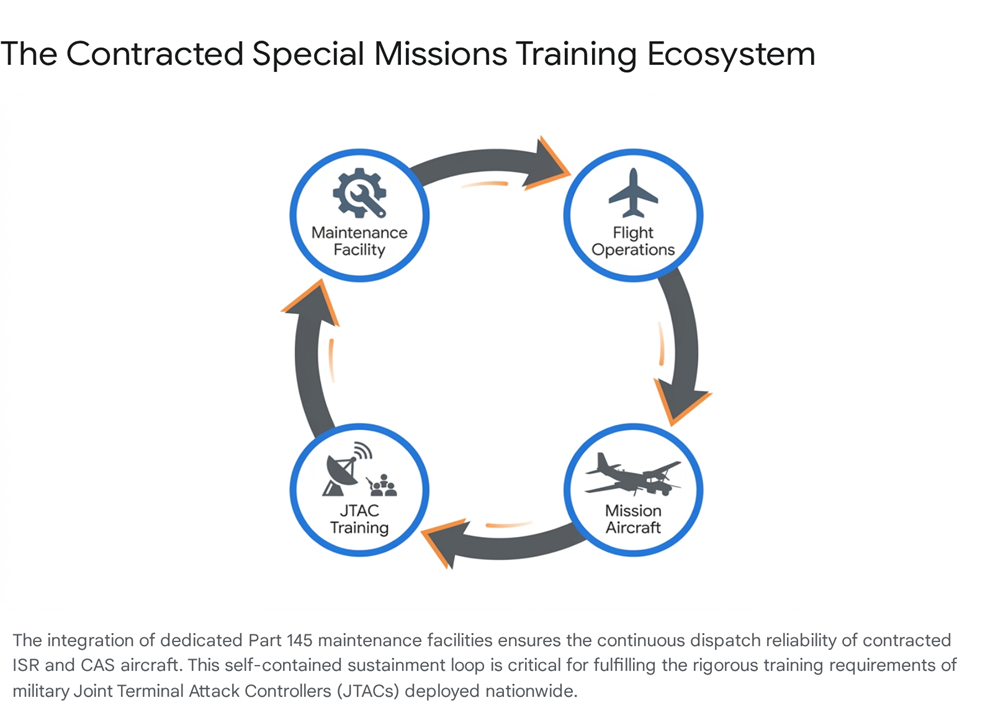
By maintaining an in-house, Part 145 certificated maintenance capability, operators like MAG bypass the severe delays and backlogs associated with third-party MRO queues. This self-reliant sustainment loop ensures their specialized ISR and SMT platforms maintain maximum availability to meet stringent Department of Defense readiness demands.
Bridging the Gap: Expanding Capabilities to Business Aviation
While the foundation of elite facilities like MAG’s Sanford location is built on supporting vital defense and special missions, the operational agility, uncompromising quality control, and rapid response times required for military support translate perfectly into the civilian sector.
Recognizing the deep synergy between maintaining high-utilization ISR platforms and servicing high-value corporate aircraft, forward-thinking Part 145 repair stations are increasingly opening their hangar doors to the broader general and business aviation communities.
The Unprecedented Surge in Business Aviation Demand
The business aviation sector is currently navigating a prolonged period of robust, historic expansion. Corporate flight departments, fractional ownership operators, and high-net-worth individuals are utilizing private aviation at record rates. This trend is driven by a post-pandemic desire for travel efficiency, heightened privacy, and total control over operational schedules, allowing executives to bypass the frictions of commercial airline travel.
According to comprehensive industry outlooks for 2025 and 2026, total new and pre-owned business jet transaction volumes are forecast to increase by a robust 8.3% year-over-year. Over the next decade, OEMs are expected to deliver approximately 8,500 new business jets, representing a staggering $283 billion in projected economic value. Furthermore, operators are flying these aircraft noticeably more; business jet flight hours increased by roughly 3% year-over-year entering 2025, with an overwhelming 64% of surveyed operators planning to maintain or increase their flight activity in the coming years.
This surge in flight hours exponentially increases the demand for routine line maintenance, complex scheduled base inspections (ranging from A-checks occurring every 400-600 flight hours to exhaustive structural D-checks), and highly critical unscheduled AOG repairs. However, business jet owners frequently face extensive, multi-month wait times for hangar space at OEM-aligned service centers. These centers are highly congested due to the broader industry labor shortages, facility capacity limits, and ongoing supply chain constraints.
The Strategic Value Proposition of Dual-Use MRO Facilities
To aggressively mitigate these operational bottlenecks, business aircraft operators are increasingly turning to independent Part 145 repair stations that possess proven, military-grade operational disciplines. Facilities that routinely support SMT aircraft possess a distinct, highly sought-after competitive advantage in the corporate sector: they are inherently structured for rapid, dependable, and complex support.
For over eight years, the Sanford facility has successfully offered general aircraft maintenance services to the local aviation community. By leveraging decades of combined technical experience across both the military and civilian arenas, these technicians seamlessly execute scheduled inspections and highly responsive AOG recoveries with the exact same urgency and precision applied to national defense assets.
The geographic location of these facilities also plays a vital strategic role. The Raleigh Executive Jetport (KTTA) serves the literal heart of North Carolina’s Research Triangle Region—an expansive area encompassing Raleigh, Durham, Chapel Hill, and the globally recognized Research Triangle Park. This region is home to hundreds of international technology, advanced manufacturing, and life science companies, generating massive volumes of corporate flight traffic. Consequently, the jetport operates as a powerful economic engine for the state, contributing an estimated $104.2 million annually to the local economy, generating $42.89 million in personal income, and supporting over 530 jobs.
By providing top-tier, Part 145 maintenance services to business jets transiting this high-density corporate corridor, facilities like MAG Sanford directly enhance the region’s broader aviation infrastructure. Expanding operational capabilities to include dedicated business jet maintenance not only diversifies the MRO’s revenue streams but also ensures that civilian corporate operators benefit directly from the meticulous quality control systems, agility, and uncompromising safety cultures demanded by federal defense contracts.
The Future of Aviation Sustainment: Artificial Intelligence and Predictive Maintenance
As the aviation industry looks toward 2026 and beyond, the fundamental mechanics of aircraft maintenance are being entirely rewritten by advanced digitalization. The traditional, century-old methodology of preventative maintenance—replacing expensive parts at strict, scheduled flight-hour or calendar intervals regardless of their actual physical condition—is rapidly being superseded by Artificial Intelligence (AI) and predictive maintenance protocols.
The Shift to Predictive Analytics and Digital Twins
Predictive maintenance leverages the massive volumes of telemetry data continuously generated by modern aircraft sensors. By piping this data into advanced machine learning algorithms, engineering systems can accurately anticipate and forecast component failures well before they manifest as operational faults. By establishing a comprehensive “digital twin” of an aircraft system, AI models can analyze micro-variations in engine temperature, hydraulic pressure, structural vibration, and electrical performance to flag an impending issue.
The financial and operational impacts of this technological shift are staggering. Industry reports indicate that the successful implementation of AI-driven predictive maintenance programs can result in a 15% reduction in unscheduled aircraft downtime and a 20% increase in overall labor productivity for MRO technicians. Furthermore, full global adoption of condition monitoring and predictive maintenance is estimated to save Fortune 500 companies 2.1 million hours of downtime and an astonishing $233 billion in maintenance costs annually.
Intelligent Fleet Management and Multi-Domain Operations
For flight departments and sophisticated MROs, this technology represents a profound “cultural shift” in fleet management. Using integrated AI software, maintenance controllers can interact with their fleets in real-time via tablet interfaces. If multiple aircraft require service simultaneously, the AI system can dynamically analyze the data and prioritize which AOG asset must be returned to service first based on the strategic criticality of its impending mission schedule.
In the defense sector, tools like the Army’s Vehicle Intelligence Tools and Analytics for Logistics and Sustainment (VITALS) are already demonstrating how machine learning can adapt to specific, intense training scenarios. These systems generate specific alerts based on how an asset is being employed—such as high-G maneuvers or low-altitude loitering—to accurately predict parts failures based on actual operational strain rather than mere generalized flight hours.
As these predictive models are perfected in the military theater, they are rapidly transitioning into the civilian business jet market. This allows advanced Part 145 repair stations to pre-order necessary components, optimize supply chains, and schedule technicians precisely when needed, effectively eliminating the severe delays associated with reactive, break-fix maintenance. The Part 145 repair stations that successfully integrate these advanced digital tools alongside their traditional mechanical expertise will undoubtedly dominate the next era of aviation maintenance, delivering unparalleled safety, efficiency, and mission readiness across all domains of flight.
We are dedicated to providing top-tier maintenance services for both Special Missions Training (SMT) aircraft and the broader general aviation community.
With our expert team and state-of-the-art resources, we guarantee high-quality support that keeps aircraft flying safely and efficiently. Whether you’re part of the military or a civilian aircraft owner, we’re here to meet your unique maintenance needs.
Ready to elevate your aircraft’s performance? Contact us today for all your aircraft maintenance needs!
Frequently Asked Questions (FAQ)
1. What is an FAA Part 145 Repair Station? A Part 145 Repair Station is an aviation maintenance facility that has been formally certificated by the Federal Aviation Administration (FAA) under Title 14 of the Code of Federal Regulations, Part 145. These specialized facilities are legally authorized to perform maintenance, preventative maintenance, scheduled inspections, and complex alterations on specific aircraft, airframes, engines, and avionics based on the exact ratings they hold. They operate under far stricter quality control systems, continuous training mandates, and documentation standards than independent, uncertificated field mechanics.
2. What are the recent SMS regulatory requirements for U.S. repair stations? Driven by a revised special condition in the bilateral safety agreement between the FAA and the European Union Aviation Safety Agency (EASA), all U.S.-based Part 145 repair stations holding EASA approval were required to fully implement an FAA-approved Safety Management System (SMS) by December 31, 2025. This critical mandate requires facilities to shift from reactive safety protocols to a proactive, formalized system of organizational risk management and hazard identification.
3. How does maintaining a business jet at a Part 145 facility impact its resale value? Utilizing a certificated Part 145 repair station is a strategic financial decision that directly impacts asset depreciation. A consistent, meticulously documented maintenance history from an FAA-approved facility demonstrates that the aircraft has been continuously maintained to the highest regulatory standards. This verifiable pedigree significantly enhances the aircraft’s market desirability, ensures smoother compliance audits, and protects its long-term financial resale value compared to aircraft maintained by independent, uncertificated field mechanics.
4. Why is business jet maintenance demand increasing in 2025 and 2026? The demand for business jet maintenance is surging due to a combination of factors: total transaction volumes for business jets are forecast to increase by 8.3%, corporate flight hours are rising by approximately 3% annually, and OEMs are projected to deliver 8,500 new jets over the next decade. This increased utilization strains existing MRO networks, making dual-use Part 145 facilities critical for alleviating backlogs and providing rapid AOG support.
5. What is Special Missions Training (SMT) and how does contracted maintenance support it? Special Missions Training (SMT) involves highly specialized flight operations designed to support military readiness, most notably training Joint Terminal Attack Controllers (JTACs) in precise Close Air Support (CAS) procedures. Private defense contractors often provide the modified aircraft and pilots for this training to preserve the flight hours of military combat jets. Dedicated Part 145 maintenance facilities, like MAG’s Sanford location, ensure these high-utilization contracted aircraft remain continuously dispatch-ready to support military deployments nationwide without operational delays.
6. What types of aircraft are commonly used for contracted JTAC and SMT operations? Contracted SMT providers require robust, adaptable platforms capable of carrying complex sensors and loitering for extended periods over training ranges. The most commonly utilized airframes are high-performance turboprops, notably the Beechcraft King Air series (such as the 300 and 360ER) and the Cessna Grand Caravan EX. These aircraft are rapidly reconfigured with belly-mounted radar pressure boxes, electro-optical/infrared (EO/IR) sensor lifts, and multiple operator stations to simulate advanced combat platforms.
7. How is Artificial Intelligence (AI) changing the future of aircraft maintenance? Artificial Intelligence is driving a fundamental paradigm shift from reactive, scheduled maintenance to highly accurate predictive maintenance. By analyzing massive datasets generated from aircraft sensors and applying machine learning algorithms to “digital twins,” AI can accurately forecast component wear and anticipate potential failures before they cause an unscheduled Aircraft on Ground (AOG) event. This digital transformation drastically reduces aircraft downtime, optimizes parts inventory, and increases overall fleet dispatch reliability, saving the industry billions annually.
