


By Dr. Donald Robison, MAG’s Chief Strategy Officer
What is Counter-UAS (C-UAS)?
Counter-Unmanned Aircraft Systems encompass the multi-layered technologies, operational protocols, and legal frameworks deployed to detect, track, identify, and mitigate the threats posed by unauthorized or hostile drones. As commercial and military unmanned aircraft systems (UAS) become increasingly sophisticated, autonomous, and accessible, organizations face unprecedented aerial vulnerabilities. Effective counter-UAS strategies require the integration of advanced detection sensors—such as active electronically scanned array (AESA) radar, radio frequency (RF) analyzers, and electro-optical/infrared (EO/IR) cameras—managed through artificial intelligence-driven sensor fusion platforms. When an unauthorized drone incurs into restricted airspace, mitigation strategies ranging from electronic signal jamming and cyber protocol manipulation to kinetic interception must be deployed in strict compliance with aviation and telecommunications laws. For critical infrastructure, defense installations, and major public venues, comprehensive C-UAS architectures represent a mandatory evolution in modern security. Deploying these complex, multi-domain defenses requires turnkey integration and operational expertise, positioning specialized aerospace and defense technology providers, such as MAG Aerospace, at the forefront of global airspace sovereignty and Command, Control, Communication, Computers, Cyber, Intelligence, Surveillance and Reconnaissance (C5ISR) modernization.
Key C-UAS Statistical Indicators
- Market Expansion: The global Counter-Unmanned Aerial System (C-UAS) market was valued at $5.12 billion in 2025 and is projected to scale from $8.5 billion in 2026 to $27.98 billion by 2032, driven by escalating defense modernization and critical infrastructure protection requirements. The specialized combat aircraft swarm radars segment is concurrently expanding from $2.36 billion in 2025 to $4.96 billion by 2035.
- Federal Funding: The Department of Homeland Security (DHS) finalized a $500 million allocation through the FEMA C-UAS Grant Program, with $250 million prioritized in Fiscal Year 2026 for state and local capabilities ahead of major events like the 2026 FIFA World Cup.
- Incident Acceleration: The Federal Aviation Administration (FAA) recorded 326 drone-related incidents near aircraft and airports within just the first four months of 2024, compounding the over 2,000 sightings tracked by the TSA between 2021 and 2023. In the European theater, German authorities recorded over 440 suspicious drone incidents over military bases in the first seven months of 2024 alone.
- Operational Validation: During the 2024 Paris Olympics, layered C-UAS technology successfully detected 355 unauthorized drones, resulting in 81 arrests and validating the necessity of multi-sensor defense architectures in dense urban environments.
- Swarm Defense Growth: The specialized market for autonomous drone swarm security is expanding at a highly accelerated rate, projected to reach $6.51 billion by 2030 at a 24.8% compound annual growth rate.
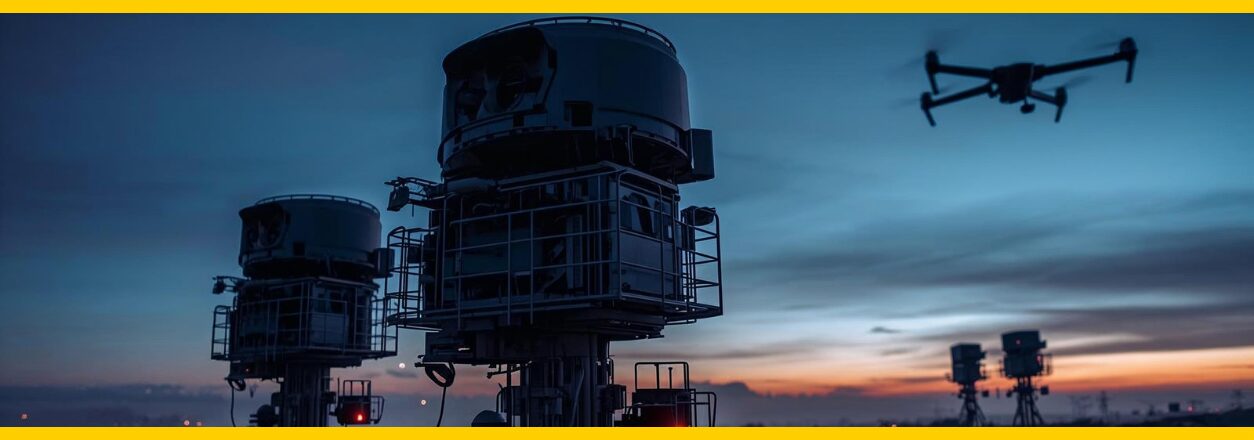
What is the Current State of the Global Counter-UAS Market in 2026?
The financial and technological scale of the aerial threat environment has triggered a massive influx of capital into the defense industrial base. The global Counter-UAS market is experiencing sustained, exponential growth as virtually every major military and security force routinely budgets for integrated defense systems. This expansion is not isolated to traditional kinetic military operations; it is heavily driven by increasing civil and commercial use cases, homeland security requirements, and the urgent need to protect critical infrastructure.
Data indicates a profound financial trajectory for the sector, reflecting the urgent global demand for scalable, interoperable airspace awareness. The broader global C-UAS market, valued at $5.12 billion in 2025, is projected to reach $8.5 billion in 2026 and surge to $27.98 billion by 2032. Within this broader market, specific sub-segments are experiencing hyper-growth due to the evolving nature of the threat. For instance, the market for combat aircraft swarm radars—systems specifically designed to detect and track massive, coordinated drone swarms—was calculated at $2.36 billion in 2025 and is expected to reach $4.96 billion by 2035, growing at a 7.7% CAGR. Similarly, the autonomous drone swarm security market is projected to reach $6.51 billion by 2030.
|
C-UAS Market Segment |
2025 Valuation | Projected Valuation | Target Year | Key Growth Drivers |
| Global C-UAS Market | $5.12 Billion | $27.98 Billion | 2032 | Drone-related security threats, worldwide defense investments. |
| Combat Aircraft Swarm Radars | $2.36 Billion | $4.96 Billion | 2035 | Defense modernization, drone swarm threats, advanced AESA adoption. |
| Autonomous Swarm Security | N/A | $6.51 Billion | 2030 | Critical infrastructure security, hybrid air-ground swarm operations. |
| Overall C-UAS Ecosystem | $2.08 Billion | $19.06 Billion | 2035 | Escalating drone threats, civil/commercial adoption, homeland security. |
This market expansion is accompanied by a structural shift in procurement strategies. Isolated, standalone detection tools are rapidly being replaced by integrated defensive architectures. By product type, mitigation and neutralization systems accounted for nearly 42% of the market share in 2026, indicating that organizations are prioritizing the complete “kill chain” from detection to defeat. North America continues to lead the global market, holding a 49% share in 2025, though the Asia Pacific region is estimated to expand at the fastest rate through 2035. Furthermore, ground-based platforms dominate the market, while airborne C-UAS systems are expected to expand at a notable rate as interceptor drones and airborne early warning platforms gain traction.
The closing of 2025 saw multi-year purchases of C-UAS technology valued at well over $1 billion in a single month, highlighting the massive influx of capital. Notable global investments included Saab receiving a SEK 1.4 billion order for its Mobile Short-Range Air Defence (MSHORAD) system from Lithuania, and AeroVironment securing long-term defense contracts in the United States. The underlying trend is clear: counter-drone systems are moving rapidly from experimental technology demonstrations into permanent, structured global security infrastructure.
Why are Unmanned Aircraft Systems a Threat to Critical Infrastructure and Defense?
The proliferation of Unmanned Aircraft Systems (UAS) has initiated a paradigm shift in both conventional warfare and domestic security. Drones inherently offer immense utility across agriculture, logistics, telecommunications, and media. However, the exact characteristics that make drones commercially viable—low acquisition costs, high maneuverability, autonomous navigation, and modular payload capacities—have been actively weaponized by state adversaries, violent non-state actors (VNSAs), and transnational criminal organizations. The threat matrix has evolved rapidly from isolated incidents of negligent hobbyists to highly coordinated, asymmetric operations designed to bypass traditional air defense networks.
Critical Infrastructure and Aviation Vulnerabilities
The vulnerability of critical infrastructure to drone incursions is a well-documented and expanding crisis. Commercial airports, energy grids, and military installations represent high-value targets where even minor disruptions yield massive economic and psychological consequences. The defining watershed moment for civil aviation occurred in December 2018 at Gatwick Airport. Repeated unauthorized drone sightings near the runway forced the shutdown of the airport for more than a day during the busy holiday travel season. The disruption caused approximately 1,000 flights to be canceled or diverted, affected around 140,000 passengers, and cost airlines tens of millions of dollars. This incident exposed systemic gaps in perimeter airspace awareness and accelerated the global adoption of multi-sensor C-UAS systems—combining radar detection, electro-optical cameras, and tracking tools—at major transportation hubs.
Energy infrastructure faces similar, if not more severe, kinetic risks. In July 2020, federal investigators discovered a modified commercial drone near a Pennsylvania electrical substation. The system had been intentionally stripped of identifying components and rigged with nylon cords and copper wire in a calculated attempt to create a short circuit across the high-voltage substation equipment. While the drone crashed prematurely before reaching its target, preventing immediate damage, a joint bulletin from federal agencies (including the FBI and DHS) warned that the incident was a clear proof-of-concept. Inexpensive commercial off-the-shelf (COTS) technology can easily be weaponized for domestic sabotage, prompting utility operators to rapidly invest in RF monitoring, thermal imaging, and perimeter radar networks.
Espionage and Cyber Infiltration Threat
Beyond physical sabotage, unmanned aerial systems present a severe threat to operational security and data integrity. In 2024, German authorities recorded a massive surge in unauthorized drone activity over military bases and critical infrastructure, logging over 440 suspicious incidents in just the first seven months of the year. Many of these incursions occurred near the Klietz military training area, where Ukrainian soldiers are trained, and over the Grafenwöhr training area. Authorities harbor serious concerns that these flights are direct espionage attempts by foreign powers, particularly Russian intelligence, aimed at observing troop movements, training protocols, and assessing NATO operational readiness.
Furthermore, as reported in Security Management by ASIS International, private organizations are increasingly vulnerable to drone-assisted corporate espionage and cyber infiltration. By flying physical payloads into close proximity with secure facilities, malicious actors can execute “nearest neighbor” cyberattacks. Drones can be configured to intercept Wi-Fi signals, acquire network credentials from remote employees, spoof local networks, or exploit weak points in cyber defenses to drop malicious payloads into otherwise air-gapped perimeters. Modern drone threats extend well beyond visual surveillance; they act as physical conduits for digital warfare. As a result, modern C-UAS architectures must be integrated seamlessly with physical security and cybersecurity operations centers.
The Arrival of Drone Swarms, AI, and Fiber-Optic Capabilities
The most alarming development in the threat landscape is the emergence of autonomous drone swarms, humanoid robotics, and fiber-optic controlled systems. Observations from modern conflicts, particularly the war in Ukraine and operations in the Middle East, demonstrate that combatants are routinely deploying swarms of inexpensive, expendable drones (such as Shahed variants) to deliberately overwhelm and exhaust expensive, traditional air defense interceptors.
A highly detailed 2026 Global Drone Threat Report highlights a rapid tactical shift from warzones to criminal enterprises, noting the proliferation of artificial intelligence-enabled targeting modules and fiber-optic control (FOC) lines. Fiber-optic controlled drones spool out a physical, lightweight fiber line as they fly, making them entirely immune to traditional RF jamming and GNSS spoofing, as they emit absolutely no radio frequency signature.
Concurrently, the integration of edge-AI allows drones to autonomously recognize targets, filter sensor data, and navigate complex terrain even when communications with the human operator are severed.
| Emerging 2026 Threat Vectors | Tactical Implication | C-UAS Challenge |
| Fiber-Optic Control (FOC) | Physical tether provides unjammable command link. | Renders traditional RF detection and RF jamming completely obsolete. |
| AI Autonomous Targeting | Drones identify and engage targets without human input. | Eliminates the need for external datalinks, bypassing electronic warfare defenses. |
| Cartel Weaponization | Transfer of military drone tactics to organized crime. | Expands the geographic threat landscape into civilian and border security domains. |
| Multi-Domain Drones | Expansion into maritime and ground-based uncrewed systems. | Forces C-UAS networks to monitor surface and sub-surface approaches simultaneously. |
These advancements demand that defensive architectures shift from reactive, single-sensor point defenses to predictive, multi-layered networks capable of massive simultaneous engagement. Future counter-drone architectures must detect threats earlier, respond faster, and scale across large areas without relying solely on highly expensive traditional missile interceptors.
How Does C-UAS Detection Work? Primary Sensor Modalities
Effective C-UAS operations rely entirely on early, accurate, and persistent detection. Because commercial and tactical drones feature exceptionally low radar cross-sections (RCS), operate at low altitudes, and maneuver unpredictably in “nap-of-the-earth” flight paths, traditional aviation radar and air traffic control systems are generally incapable of reliably tracking them. Consequently, specialized C-UAS networks rely on a combination of primary sensor technologies, each designed to exploit a different physical, acoustic, or electromagnetic signature of the intruding aircraft.
1. Radio Frequency (RF) Analyzers
The vast majority of commercial and modified drones rely on radio frequency signals to maintain a communication link with their remote operators, transmit live video telemetry, and receive satellite navigation data (GNSS/GPS). RF analyzers consist of specialized antennas and receivers that passively scan the electromagnetic spectrum for the distinct transmission protocols and hopping patterns used by unmanned systems.
When an RF sensor detects a drone’s control link or telemetry broadcast, it can frequently extract critical metadata. Advanced RF systems can identify the exact make, model, and sometimes the unique serial or MAC address of the drone. More importantly, through techniques such as Time Difference of Arrival (TDOA) or Angle of Arrival (AoA) utilizing multiple networked antennas, RF sensors can pinpoint the exact geographic location of the drone operator on the ground. This capability provides a massive tactical advantage, allowing security forces to dispatch law enforcement to apprehend the pilot and neutralize the threat at its source.
However, RF detection has inherent limitations. It is limited by line-of-sight constraints, dense urban RF clutter, and an inability to detect autonomous drones operating under emission control (EMCON) or those utilizing the newly emerging fiber-optic tethers, which emit zero RF signatures.
2. Specialized Radar Systems
Radar (Radio Detection and Ranging) remains the foundational backbone of long-range aerial surveillance. Specialized C-UAS radar systems differ significantly from standard aviation radar; they operate at higher frequencies (such as X-band or Ku-band) and utilize sophisticated Doppler processing to detect micro-Doppler signatures. While a drone’s overall body may have a tiny RCS, the high-speed spinning rotors create unique micro-Doppler shifts that algorithms can separate from the movement of biological clutter, such as flocks of birds or swaying trees.
The defense market is currently seeing a rapid transition toward Active Electronically Scanned Array (AESA) radars for C-UAS applications. AESA systems utilize thousands of individual solid-state transmit/receive modules to electronically steer radar beams without moving parts. This allows the radar to perform simultaneous 3D volume search and precision tracking of multiple targets instantly, an essential capability for detecting and countering dense, coordinated drone swarms. Radar is highly effective regardless of whether the drone is actively emitting an RF signal, and it functions exceptionally well in adverse weather conditions, providing persistent 360-degree coverage.
3. Electro-Optical and Infrared (EO/IR) Cameras
Visual verification is a critical step in the “kill chain” or mitigation process. Security operators must visually confirm the nature of a radar or RF track before initiating a kinetic or electronic response, ensuring they are not targeting a civilian aircraft or a bird. Electro-optical cameras provide high-definition, magnified visual tracking during daylight hours, while infrared (thermal) cameras detect the heat signatures emitted by drone motors, batteries, and payloads, enabling 24/7 operations in complete darkness or through light obscurants like smoke and fog.
EO/IR systems are rarely used for initial wide-area search due to their narrow field of view. Instead, they are integrated with radar or RF sensors via an automated “slew-to-cue” mechanism. When the primary sensor detects an anomaly, it instantly feeds the coordinate data to the EO/IR gimbal, which snaps to the target’s precise location. Advanced AI algorithms within the camera system then take over, locking onto the drone’s pixels to provide automated, persistent optical tracking and payload characterization (e.g., determining if the drone is carrying a suspended explosive or a high-resolution camera).
4. Acoustic Sensors
Acoustic sensors utilize distributed arrays of highly sensitive microphones to detect the unique sound signatures generated by drone propellers and electric motors cutting through the air. The acoustic data is processed through complex algorithms that match the captured audio profile against a vast, continuously updated library of known drone signatures. While acoustic sensors possess a significantly shorter detection range compared to radar or RF systems, they are highly valuable in dense urban environments, stadium venues, or heavily forested areas where physical structures and dense foliage block radar and RF lines of sight.
What is Layered Sensor Fusion in Counter-UAS?
Relying on any single detection methodology inevitably leaves exploitable gaps in an organization’s security perimeter. An RF-only system will fail completely to detect a drone flying on a pre-programmed, autonomous GPS waypoint mission with its datalink intentionally severed. A radar-only system may struggle to differentiate a hovering multi-rotor drone from stationary infrastructure in a high-clutter urban environment. An EO/IR camera is useless for initial detection if it does not know exactly where to look in the vast sky.
Layered sensor fusion solves these critical vulnerabilities. It is the process of integrating disparate, heterogeneous data streams from RF, radar, EO/IR, and acoustic sensors into a single, cohesive Command and Control (C2) software architecture. In a modern C-UAS platform, artificial intelligence ingests these inputs simultaneously. If a radar system detects an inbound track with the velocity of a small UAS, the C2 system will query the acoustic network to listen for a corresponding motor signature. Once cross-verified, the system autonomously slews the EO/IR camera to the exact coordinates for visual confirmation.
This algorithmic cross-verification drastically reduces the rate of false positive alarms, improves tracking accuracy, and compresses the decision-making timeline for security personnel. Instead of monitoring five different screens and manually attempting to correlate data in their heads, operators are presented with a unified “single pane of glass” providing a clear, real-time Common Operating Picture (COP) of the airspace. In 2026, multi-sensor fusion augmented by AI is the baseline standard for any credible C-UAS deployment protecting high-value assets.
How Are Hostile Drones Neutralized? Active Mitigation and Electronic Warfare
Once a C-UAS platform detects, tracks, and positively identifies a hostile drone, the system must offer mechanisms to stop the threat. Mitigation technologies are broadly categorized into non-kinetic (electronic/cyber) and kinetic (physical) solutions.
1. Electronic Warfare: Jamming and Disruption
Jamming is the most common and historically prevalent form of C-UAS mitigation. It involves broadcasting a high-power burst of electromagnetic energy precisely tuned to the specific frequencies used by the drone for control and navigation (typically the 2.4 GHz and 5.8 GHz ISM bands, alongside GNSS/GPS bands). By raising the localized noise floor, the jammer effectively severs the communication link between the drone and its pilot.
When a commercial drone loses its command link, its onboard flight controller automatically triggers pre-programmed safety protocols. The drone will typically halt its current trajectory and hover in place, initiate a controlled vertical descent, or attempt a “Return to Home” (RTH) maneuver to its original launch coordinates. While highly effective against commercial off-the-shelf drones, jamming is a brute-force approach. It emits significant RF energy that can inadvertently cause collateral disruption to legitimate civilian communications, air traffic control, and emergency medical services networks in the vicinity.
2. Cyber Takeover and Signal Spoofing
Spoofing and protocol manipulation represent a much more surgical, cyber-centric approach to mitigation. Rather than simply blasting noise to block a signal indiscriminately, spoofing systems transmit counterfeit GPS coordinates or replicated control commands directly to the drone’s navigation systems. This electronic deception tricks the drone into believing it is located in a different geographical area, or it forces the drone to accept commands from the security operator rather than the original pilot.
Advanced Cyber-over-RF (CoRF) protocol manipulation technologies can safely commandeer the drone, identifying, tracking, and taking control of unauthorized UAS with high precision. This allows operators to override the drone’s systems, steer it away from sensitive infrastructure, and land it securely in a designated containment zone. This method is highly prized in dense urban areas and airports, as it mitigates the threat without jamming surrounding communications networks or causing the drone to fall unpredictably onto civilians.
3. Kinetic Interceptors and Directed Energy
As threat actors increasingly adopt fiber-optic controls, autonomous AI navigation, and sophisticated anti-jamming antennas, electronic mitigation is becoming less reliable. When a drone operates without an RF link or ignores electronic disruption entirely, kinetic mitigation is required to physically neutralize the vehicle mid-flight.
Kinetic solutions range from net guns that fire heavy mesh to entangle rotors, to sophisticated, high-speed interceptor drones. The economics of drone warfare are currently shifting; rather than firing multi-million-dollar missiles at cheap drones, defense contractors are developing low-cost, single-use autonomous interceptors capable of matching the speed and maneuverability of incoming threats, effectively creating drone-on-drone kinetic defeat mechanisms.
For military and high-tier government facilities, Directed Energy Weapons (DEWs) are moving to the forefront. High-energy lasers and high-power microwaves (HPM) are being integrated into base defenses to instantly fry a drone’s internal circuitry or physically destroy its airframe at the speed of light, providing a deep magazine capacity against large swarms.
What are the Legal Frameworks and NDAA FY2026 Policies Governing C-UAS?
While C-UAS technology advances at breakneck speed, the legal environment governing its use remains highly restrictive, complex, and strictly enforced. In the United States, the deployment of active mitigation technologies is tightly regulated by multiple federal agencies to ensure aviation safety and communications integrity.
Under federal law (specifically Title 18 U.S.C. § 32), the Federal Aviation Administration (FAA) classifies drones of all sizes as “aircraft.” Consequently, shooting down, destroying, disabling, or physically intercepting a drone is a severe federal crime, legally treated similarly to destroying a manned passenger plane. Furthermore, the Federal Communications Commission (FCC) strictly prohibits the use of signal jamming equipment by unauthorized entities. Unauthorized RF emissions violate the Communications Act of 1934 and can critically disrupt legitimate aviation, cellular, and emergency responder frequencies.
Currently, only highly specific federal agencies—such as the Department of Defense (DoD), the Department of Homeland Security (DHS), the Department of Energy (DOE), and the Department of Justice (DOJ)—possess the statutory authority to actively jam, spoof, or kinetically intercept drones within the United States.
Policy Shifts and the 2026 Regulatory Landscape
The regulatory environment is gradually shifting to address the escalating domestic and international threat. The National Defense Authorization Act for Fiscal Year 2026 (FY26 NDAA) introduced the most significant updates to federal C-UAS policy in years, expanding mitigation authorities and establishing the Joint Interagency Task Force 401 under the DoD (codified in 10 U.S.C. § 199) to centrally coordinate national responses to small-UAS threats, integrate solutions across military branches, and develop comprehensive training materials.
Concurrently, the White House has prioritized restoring airspace sovereignty. The DHS recently launched a new Program Executive Office for UAS and C-UAS to rapidly procure counter-drone technology and oversee strategic investments. This office immediately advanced a $115 million investment in counter-drone technologies to secure America250 events and 2026 FIFA World Cup venues. Furthermore, the FEMA C-UAS Grant Program, established under the One Big Beautiful Bill Act of 2025, allocated a total of $500 million to enhance state, local, tribal, and territorial (SLTT) capabilities to detect and track unlawful drone activity. For Fiscal Year 2026, $250 million was prioritized and allocated across critical risk tiers.
| FY 2026 FEMA C-UAS Grant Program Allocations (Tier 1) | Allocation Amount | Target Beneficiary |
| California | $34,591,628 | State / Local Capabilities |
| Texas | $30,276,431 | State / Local Capabilities |
| District of Columbia (incl. MD, VA) | $28,266,328 | State / Local Capabilities |
| Florida | $23,636,511 | State / Local Capabilities |
| New Jersey | $21,764,005 | State / Local Capabilities |
Despite these massive federal expansions and funding influxes, private organizations, critical infrastructure operators, and local law enforcement are generally prohibited from actively neutralizing drones themselves. For non-federal entities, a legally compliant C-UAS strategy must focus exclusively on passive detection, tracking, real-time threat verification, and the rapid sharing of actionable intelligence with authorized federal responders.
Conclusion: Securing the Skies of Tomorrow
As we look toward the horizon of 2026 and beyond, the technological arms race between drone manufacturers and C-UAS developers is accelerating at an unprecedented pace. The prevailing trend is the complete weaponization of artificial intelligence. Future drone threats will not rely on remote human pilots transmitting target data over vulnerable RF links; they will operate as distributed, autonomous swarms capable of self-healing networks, collaborative targeting, and fiber-optic communication.
To counter this, C-UAS defense architectures are transitioning away from localized point-defense systems toward massive, integrated regional networks. Future defenses will leverage cloud-based AI to analyze vast datasets of drone flight paths, predicting incursions before they breach perimeters. Furthermore, as electronic warfare (jamming) becomes less effective against fiber-optic and autonomous threats, the defense industrial base will dramatically increase procurement of Directed Energy Weapons and low-cost, AI-piloted kinetic interceptor drones designed to physically smash hostile swarms out of the sky.
In this rapidly escalating environment, understanding the technology, mastering the strict legal constraints, and partnering with proven integration experts like MAG Aerospace is the only viable path to ensuring operational continuity and protecting critical assets from the aerial threats of tomorrow. A proactive, layered, and legally compliant C-UAS strategy is no longer a luxury; it is a fundamental requirement for modern security.
By understanding the technology and the legal framework, organizations can build effective defenses against unauthorized unmanned aircraft. Protect your assets through comprehensive detection, intelligent sensor fusion, and strict operational protocols. To further strengthen your approach, explore how Mag Aero’s specialty aviation solutions can support your mission by visiting MAG’s Specialty Aviation today.
Frequently Asked Questions (FAQ)
1. What is counter UAS?
Counter Unmanned Aircraft Systems (C-UAS) refer to the comprehensive suite of technologies, operational protocols, and systems designed to detect, track, identify, and mitigate the risks posed by unauthorized or hostile drones. Effective C-UAS solutions do not rely on a single tool; rather, they combine multiple sensors—such as radar, RF analyzers, EO/IR cameras, and acoustic detectors—to provide early warning and complete airspace situational awareness. When authorized by law, C-UAS platforms also integrate mitigation effectors, ranging from electronic signal jamming and GNSS spoofing to physical kinetic interceptors, to neutralize the threat before it reaches its target.
2. How to counter drone warfare?
Countering modern drone warfare requires deploying a layered security architecture that integrates advanced detection sensors, AI-driven sensor fusion platforms, and active countermeasures tailored to specific, evolving threats. As drone warfare rapidly shifts toward autonomous swarms and fiber-optic controls, organizations must utilize C-UAS technologies to achieve rapid detection and visual verification. Because active mitigation is highly restricted by law in domestic environments, countering drone warfare domestically involves coordinating closely with federal authorities for legal intervention, establishing clear response protocols, and investing in continuous staff training to maintain readiness against asymmetric tactics.
3. How can you detect a drone in the sky?
Detecting a drone involves deploying specific, specialized sensors designed to overcome the low radar cross-section and unpredictable flight paths of unmanned systems. The most effective approach utilizes layered detection: Radio Frequency (RF) analyzers passively monitor the communication signals between the drone and its controller; specialized C-UAS radar systems bounce high-frequency radio waves to spot physical objects; Electro-Optical/Infrared (EO/IR) cameras provide visual identification and thermal tracking day or night; and acoustic sensors listen for the distinct acoustic signature of drone propellers. Fusing these methods provides a holistic and accurate detection capability.
4. Are private organizations allowed to neutralize drones themselves?
No. In the United States, it is strictly illegal for private organizations, commercial entities, or local law enforcement to actively neutralize, shoot down, or electronically jam drones. The FAA classifies drones as aircraft, making physical destruction a federal crime, while the FCC prohibits unauthorized signal jamming due to the severe risk of disrupting legitimate emergency and aviation communications. Only specific federal agencies (such as the DoD, DHS, and DOJ) hold the legal authority to actively mitigate drones. Private organizations must focus on passive detection, tracking, and alerting authorized law enforcement.
5. What is layered sensor fusion in C-UAS?
Layered sensor fusion is the intelligent integration of multiple, disparate sensor data streams (RF, radar, EO/IR, and acoustic) into a single, cohesive command-and-control platform. Because every individual sensor has limitations—such as radar struggling with biological clutter or RF failing to detect autonomous drones—fusion software utilizes artificial intelligence to cross-verify threats. For instance, if radar detects an object and acoustics confirm a motor sound, the system correlates the data to eliminate false alarms and automatically directs a camera for visual confirmation, providing operators with a clear, highly accurate operational picture.
6. How to legally take down a drone?
It is illegal for individuals or non-federal organizations to physically shoot down, disable, or electronically interfere with a drone, as they are protected as aircraft under federal law (18 U.S.C. § 32). Doing so can lead to severe criminal and civil penalties. To legally handle a hostile drone, organizations should utilize passive C-UAS detection systems to track the drone’s flight path and immediately use RF data to locate the drone’s operator on the ground. This actionable intelligence must then be rapidly reported to local law enforcement or federal authorities, such as the FAA or DHS, who possess the jurisdictional authority to apprehend the pilot and secure the airspace.
7. What is the global C-UAS market size in 2026?
The global Counter-Unmanned Aerial System (C-UAS) market is experiencing rapid expansion due to escalating global security threats and defense modernization efforts. The market was valued at approximately $5.12 billion in 2025 and is projected to reach $8.5 billion in 2026, with forecasts indicating it will scale to $27.98 billion by 2032. This massive growth is driven by heavy investments from both military forces and critical infrastructure operators seeking to deploy permanent, structured counter-drone defensive architectures.
8. How do fiber-optic drones affect C-UAS?
Fiber-optic controlled (FOC) drones represent a massive paradigm shift in drone warfare because they operate completely independently of radio frequency (RF) links. By spooling out a physical fiber line for communication and video transmission, these drones emit zero RF signatures, rendering traditional RF detection systems and RF jamming countermeasures entirely obsolete. To counter FOC drones, C-UAS networks must pivot heavily toward multi-modal sensing—specifically advanced AESA radar, acoustics, and EO/IR tracking—combined with kinetic interception or Directed Energy Weapons (DEWs) to physically destroy the threat.
