

What Is Authentic Intelligence in Aerial Reconnaissance?
Authentic Intelligence in aerial reconnaissance is the strategic fusion of advanced artificial intelligence (AI) with human cognitive expertise, utilizing AI as a high-speed processing prosthetic while relying on human analysts for context-aware decision governance. This paradigm ensures that automated data processing augments human capabilities rather than replacing the human-in-the-loop accountability required in high-stakes defense and civilian operations.
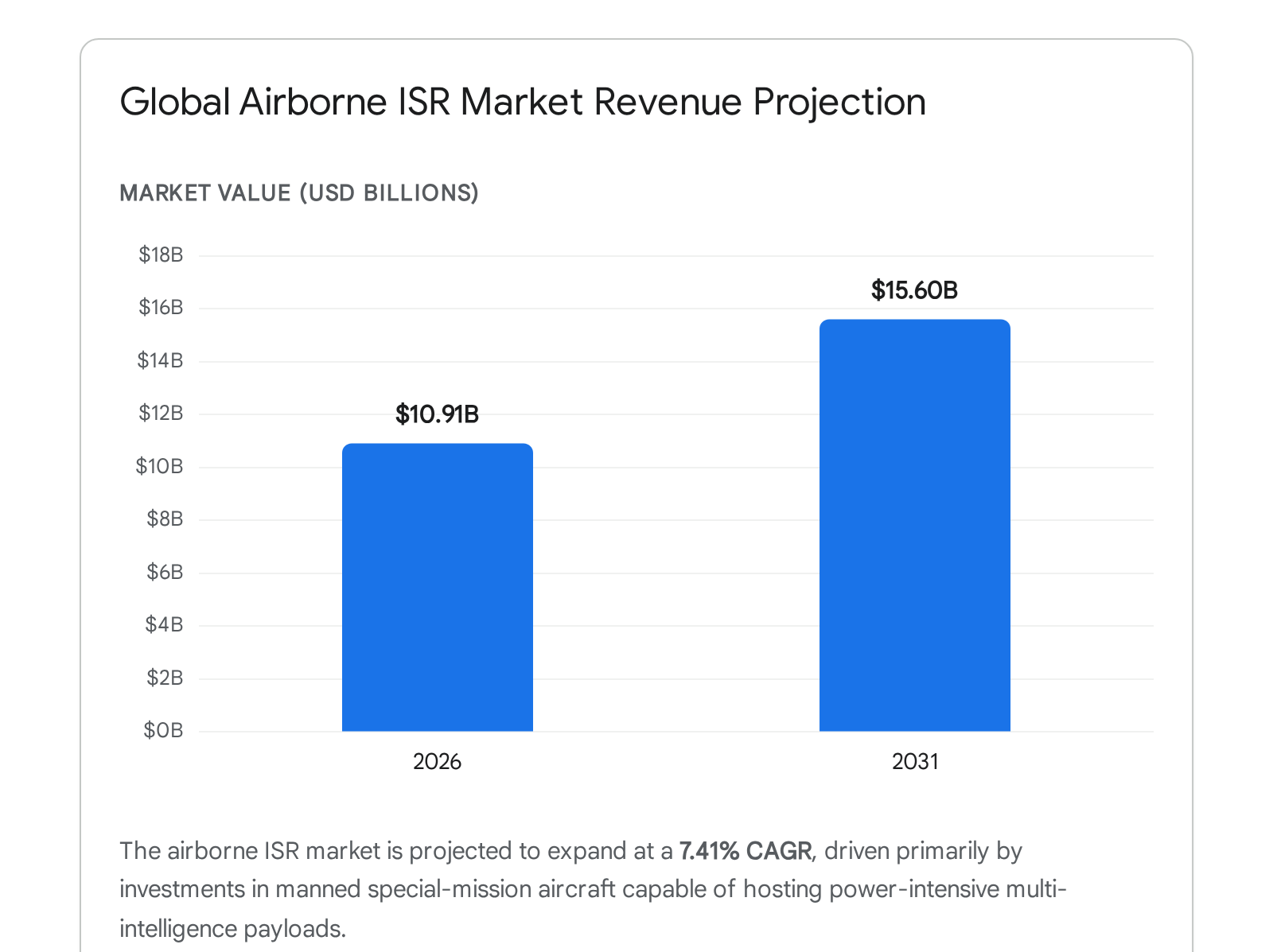
- Airborne ISR Market Growth: The global airborne Intelligence, Surveillance, and Reconnaissance (ISR) market reached an estimated valuation of $10.91 billion in 2026 and is projected to expand at a 7.41% compound annual growth rate (CAGR), targeting $15.60 billion by 2031.
- Manned Platform Dominance: Manned special-mission aircraft currently dominate the airborne ISR sector, capturing 71.17% of total revenue in 2026, driven by their unmatched ability to host power-intensive multi-intelligence payloads and securely integrate into classified networks.
- MC-208 Guardian Availability: The U.S.-built MC-208 Guardian maintains a historic 98% availability rate, requiring only a five-person team to sustain global 24/7 operations in austere environments.
- ATHENA-R Operational Tempo: High-altitude ATHENA-R platforms, based on the Bombardier Global 6500, are currently averaging more than 400 flight hours per month in the U.S. Indo-Pacific Command, providing critical targeting line-of-sight data.
- Wildfire Reconnaissance: Using live satellite data transmission, aerial reconnaissance fleets have successfully detected hundreds of initial wildfire starts, a critical capability for mitigating disasters such as the 59,844-acre Lee Fire in Colorado.
The concept of artificial intelligence has experienced cyclical periods of intense development and subsequent stagnation—often referred to as “AI winters”—since Alan Turing first proposed the Turing Test in 1950 to determine if a machine could mimic human behavior. While modern AI models can autonomously process massive datasets and simulate human reasoning, they fundamentally lack the complex, layered intuition and contextual understanding that emerges from human experience. In the highly volatile domain of aerial reconnaissance, where platforms must identify asymmetric threats or map erratic natural disasters, raw machine automation is insufficient. Authentic Intelligence emerges as the optimal solution. It filters out the overwhelming noise generated by modern multi-spectral sensors, allowing the human intelligence analyst to focus entirely on strategic interpretation and mission execution.
MAG Aerospace has operationalized the Authentic Intelligence concept by integrating cutting-edge machine learning directly at the tactical edge. As the battlespace becomes increasingly digitized and communication networks face electronic warfare threats, relying on continuous satellite uplinks to transmit raw data is a critical vulnerability. Authentic Intelligence solves this by processing data locally. The onboard AI ingests feeds from ground-based and airborne sources, blending electro-optical, infrared, and signals intelligence to autonomously track and identify targets. Instead of transmitting gigabytes of vulnerable raw video, the system transmits only kilobytes of highly refined, actionable intelligence, empowering commanders to make split-second decisions with absolute confidence.
How Is the Global Airborne ISR Market Evolving in 2026?
The global airborne ISR market in 2026 is experiencing aggressive expansion, valued at $10.91 billion and projected to grow at a 7.41% CAGR to reach $15.60 billion by 2031, driven by multi-domain security requirements and the integration of AI-driven sensor fusion. Defense applications remain the dominant end-user, accounting for nearly 79% of the market as military forces prioritize high-altitude, long-endurance platforms to detect and classify complex asymmetric threats.
The procurement landscape has fundamentally shifted away from purchasing isolated hardware toward acquiring comprehensive, integrated systems. Modern customers demand a complete ISR chain encompassing sensors, mission computers, fusion software, secure data links, and ground exploitation networks. In highly contested environments, a tightly integrated ISR system drastically outperforms disconnected components, reducing integration risks, speeding up modernization upgrades, and enhancing interoperability. Consequently, the systems segment captured the largest market share in 2025 and is anticipated to dominate with a 62.92% share throughout 2026.
Despite the proliferation of unmanned aerial systems (UAS), manned special-mission aircraft remain the cornerstone of the industry, capturing 71.17% of the total revenue share. Manned platforms are uniquely capable of hosting heavy, power-hungry radars and SIGINT suites while securely integrating into classified networks. Furthermore, human operators on board provide the mission flexibility required for high-stakes, dynamic environments where assured communications cannot be guaranteed.
Regionally, North America remains the largest market, accounting for a massive 94.7% revenue share in the broader C5ISR (Command, Control, Computers, Communications, Cyber, Intelligence, Surveillance, and Reconnaissance) sector in 2024, supported by massive defense budgets and continuous modernization programs. However, the Asia-Pacific region is the fastest-growing market. Expanding at a projected 7.87% CAGR, this growth is propelled by nations urgently seeking to monitor vital sea lanes, exclusive economic zones (EEZs), and contested maritime territories. These maritime patrol missions require wide-area radars, long-endurance platforms, and advanced electronic support measures (ESM) to cue response forces effectively.
| Market Metric | 2026 Valuation | Projected 2031 Valuation | CAGR (2026-2031) | Dominant Segment |
|---|---|---|---|---|
| Global Airborne ISR | $10.91 Billion | $15.60 Billion | 7.41% | Defense (78.97%) |
| Platform Revenue Share | 71.17% (Manned) | N/A | N/A | Manned Special-Mission |
| Systems Segment Share | 62.92% | N/A | N/A | Integrated Sensor Chains |
| Regional Growth | Largest: North America | Fastest: Asia-Pacific | 7.87% (APAC) | Maritime Patrol |
Table 1: 2026 Global Airborne ISR Market and Growth Projections.
The integration of artificial intelligence is fundamentally altering the economic models of the ISR industry. Advanced AI models have successfully compressed processing cycles to under five minutes, reducing the analytical workload by 60%. This dramatic increase in efficiency unlocks new recurring software revenue streams for integrators while simultaneously providing end-users with unparalleled data velocity for real-time battle damage assessments and strategic warnings.
What Are the Core Capabilities of Mission-Ready Aerial Reconnaissance?
Mission-ready aerial reconnaissance relies on a versatile, Multi-Intelligence (Multi-INT) architecture, enabling platforms to gather, fuse, and transmit critical data across the entire electromagnetic spectrum. This includes Electro-Optical/Infra-Red (EO/IR) full-motion video, Synthetic Aperture Radar (SAR), Light Detection and Ranging (LIDAR), Hyperspectral Imagery (HSI), and Signals Intelligence (SIGINT).
The effectiveness of modern aerial mapping and data collection stems from the overlapping redundancies of these sensor technologies. Because adversaries utilize sophisticated camouflage and deception tactics, and environmental factors like weather routinely obscure visibility, a single-sensor approach is tactically insufficient. Each sensor compensates for the limitations of the others, creating a comprehensive and impenetrable operational picture.
- Electro-Optical/Infra-Red (EO/IR) and Full Motion Video (FMV): EO/IR sensors capture high-resolution, full-motion imagery in both the visible and infrared spectrums. This allows for persistent surveillance during the day, night, and in low-visibility conditions. When coupled with laser designators, these optical systems provide precise targeting coordinates for ground forces and guide precision munitions to their targets.
- Synthetic Aperture Radar (SAR): Unlike optical sensors, which are easily blinded by clouds or smoke, SAR uses active microwave pulses to penetrate atmospheric obscurations. By measuring the reflected radar waves, SAR generates highly detailed two-dimensional or three-dimensional reconstructions of landscapes, making it indispensable for all-weather surveillance and detecting subtle changes in terrain or infrastructure.
- Light Detection and Ranging (LIDAR): Utilizing rapidly pulsed laser light to measure variable distances, LIDAR generates highly accurate, centimeter-level topographical maps. It is extensively utilized in civilian applications, such as infrastructure inspection, flood modeling, and forestry management, as well as providing critical 3D terrain intelligence for defense mapping.
- Hyperspectral Imagery (HSI): HSI analyzes a massive spectrum of light across hundreds of contiguous bands, going far beyond human vision. This allows analysts to identify the exact chemical composition of materials on the ground. HSI can instantly distinguish between real foliage and artificial camouflage netting, or detect specific mineral deposits and hazardous chemical spills.
- Signals Intelligence (SIGINT): SIGINT focuses on the interception of electronic transmissions, communications, and radar emissions. By identifying and geolocating adversary communications, SIGINT provides vital strategic context, illuminating enemy troop movements, command structures, and air defense networks before visual confirmation is even possible.
Contractors with proven manufacturing and technical expertise, such as MAG Aerospace, ensure these diverse sensors undergo seamless aircraft integration. This involves utilizing traditional radar, GPS-based technologies, and modular multi-sensor stations linked to beyond-line-of-sight (BLOS) satellite communications. This open-architecture approach guarantees that as ISR technologies continually evolve, new capabilities can be rapidly adapted and optimized to meet emerging intelligence-gathering requirements without requiring entire fleet overhauls.
What Makes the MC-208 Guardian the Premier Multi-Role ISR Aircraft?
The MC-208 Guardian is a premier multi-role aircraft built on the rugged Cessna 208 Caravan platform, uniquely capable of executing ISR, air mobility, medical evacuation (MEDEVAC), close air support, and precision strike missions in a single sortie without requiring ground reconfiguration. Boasting a historic 98% availability rate and a very low cost-per-flight-hour, the aircraft provides unmatched operational efficiency in austere environments.
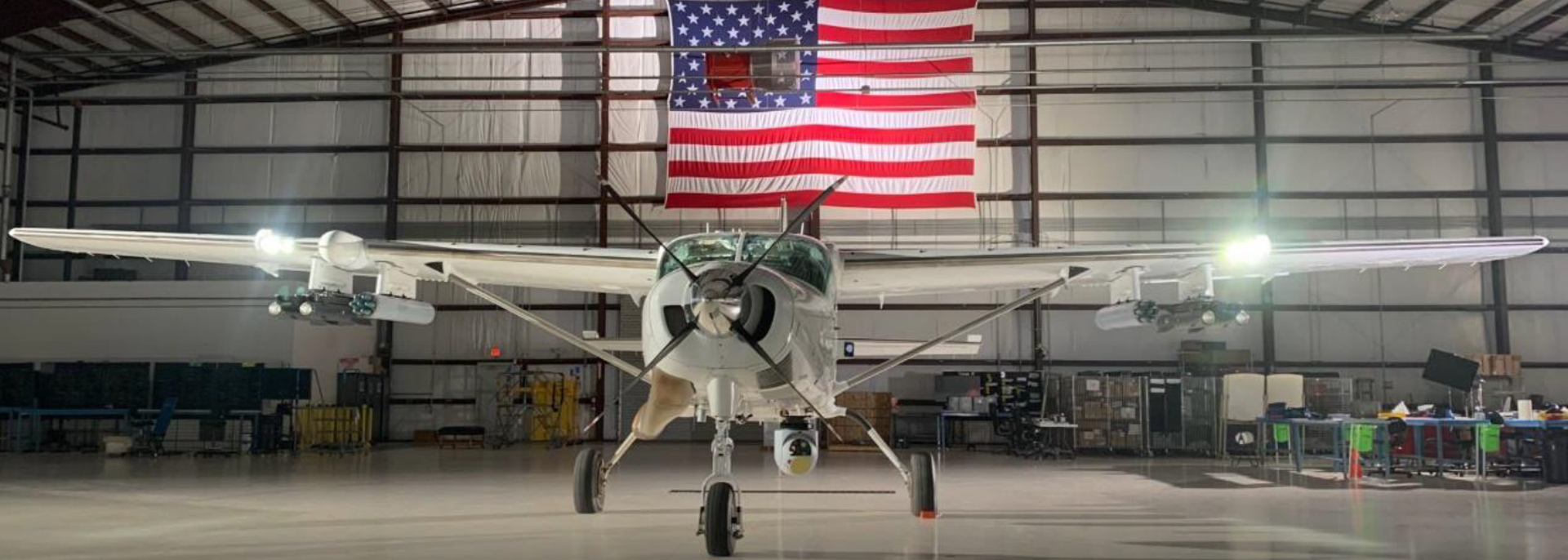
Built in the USA, it contains MAG-integrated sensors, communications, avionics, and weapons systems. The MC-208 can easily support missions such as:
- ISR
- Air mobility
- CASEVAC/MEDEVAC
- Armed reconnaissance
- Strike coordination
- Precision strike
We designed the MC-208 Guardian to operate with minimal support and tooling, and it boasts a historic 98% availability rate with a very low cost-per-flight-hour. Here are some other highlights about this reliable and versatile aircraft:
- USAF SEEK EAGLE certified
- Easy breakdown for transport with a 9-hour reassembly time
- Able to take off and land on short, austere runways
- 8-hour total mission duration
- Multiple, secure communication channels
- Time-synchronized digital recording of cockpit audio and MFD data for playback
- Four weapons-capable hardpoints
- Auto-pilot able to control ISR flight orbit
- Oxygen capacity for 2 crew for 8 hours
- All flight instruments and mission displays are NVD compliant
The engineering philosophy behind the MC-208 Guardian prioritizes versatility, survivability, and rapid deployability. The aircraft features four weapons-capable hardpoints, a belly-mounted EO/IR sensor, and a robust satellite communications array. With a maximum cruise speed of 186 knots and an endurance exceeding six hours (expandable to over eight hours with auxiliary tanks), the aircraft provides exceptional time-on-station for prolonged surveillance orbits. Its operational footprint is remarkably small; a five-person team comprising two pilots and three maintainers can sustain global 24/7 operations utilizing the pre-existing commercial Caravan parts distribution network. For rapid global response, the aircraft can be disassembled in 4.5 hours, transported inside a C-17 military transport (which can hold two Guardians simultaneously), and reassembled to mission-ready status within eight hours, allowing it to be mission-ready almost anywhere in the world within 48 hours.
From a technical and tactical standpoint, the MC-208 Guardian transforms a proven utility airframe into a formidable combat asset. The cockpit features a Garmin G-1000 glass interface, protected alongside the occupants by a ballistic modular armor system constructed from ultra-high molecular weight polyethylene (UHMWPE). The sensor suite is anchored by an L3Harris Wescam MX-15D EO/IR system, managed by the L3Harris ForceX mission management software, enabling real-time targeting and FMV transmission over multiple secure channels, including Link-16 and Ku/Ka SATCOM. Furthermore, the aircraft is USAF SEEK EAGLE certified for weapons separation, featuring four wing-mounted hardpoints capable of deploying AGM-114 Hellfire missiles, APKWS laser-guided rockets, and Hydra 70 rockets. A common launch tube rack system also allows for the internal launch of stand-off precision guided munitions (SOPGM). This weaponization, coupled with its ability to take off and land on unimproved dirt runways as short as 2,030 feet, makes the Guardian a highly sought-after platform for special operations forces requiring both deep intelligence gathering and immediate kinetic strike capabilities.
How Does the MC-208 Guardian Compare to Competing ISR Platforms?
When evaluated against competing light attack and ISR platforms, the MC-208 Guardian distinguishes itself through its unmatched multi-mission interior volume and commercial-derivative sustainability. While competitors focus heavily on either pure strike capabilities or uncrewed endurance, the Guardian balances significant cargo capacity, personnel transport, and precision strike within a single, highly available airframe.
The United States Special Operations Command (USSOCOM) Armed Overwatch program highlighted the distinct operational philosophies among light attack aircraft. The competition, aimed at procuring a fleet of 75 flexible, fixed-wing aircraft for austere regions, featured prototypes such as the Textron AT-6E Wolverine, the L3Harris AT-802U Sky Warden, the Sierra Nevada M28/C-145 Wily Coyote, the Leidos Bronco II, and the MAG Aerospace MC-208 Guardian. USSOCOM awarded five fixed-price prototype project agreements totaling over $19 million to test these systems against well-defined criteria.
| Feature | MC-208 Guardian | Traditional Light Attack (e.g., AT-6E) | Unmanned Aerial Systems (UAS) |
|---|---|---|---|
| Primary Base Airframe | Cessna 208 Caravan (Utility) | Purpose-built Trainer/Light Attack | Custom Composite Airframe |
| Mission Reconfiguration | None required (Simultaneous ISR/Strike/Transport) | Requires ground reconfiguration | Dedicated payloads (Limited flex) |
| Personnel Transport | Up to 9 occupants (including CASEVAC) | 2 Crew maximum | None |
| Logistical Footprint | Commercial supply chain, 5-person team | Specialized military supply chain | High bandwidth/ground station needs |
| Deployment | 2 fit in C-17, 9-hour reassembly | Self-deploy or heavy transport | Varied, often requires runway |
Table 2: Comparative operational advantages of the MC-208 Guardian against traditional defense platforms.
The primary differentiator for the MC-208 Guardian against its closest equivalent, the AC-208 Combat Caravan, and agile turboprops like the AT-6E Wolverine, is its spacious fuselage. Traditional light attack aircraft are tandem-seat platforms that offer zero capability for troop infiltration, exfiltration, or casualty evacuation (CASEVAC). The Guardian provides the volume necessary to transport personnel while simultaneously executing armed reconnaissance.
Furthermore, while UAS platforms offer extended loiter times without risking human pilots, they operate with significant logistical constraints, requiring massive bandwidth for remote piloting and remaining highly vulnerable in GPS-denied or heavily contested electronic warfare environments where satellite links can be severed. The Guardian’s human-in-the-loop, multi-role configuration effectively eliminates the need to deploy multiple specialized aircraft to a single austere location, drastically conserving military resources while maintaining a 98% operational availability rate.
How is the ATHENA-R Program Redefining High-Altitude ISR?
The Army Theater Level High-Altitude Expeditionary Next Airborne ISR Radar (ATHENA-R) program represents a critical paradigm shift in deep-sensing capabilities, utilizing modified commercial business jets to provide unprecedented endurance, payload capacity, and standoff surveillance ranges. Built upon the Bombardier Global 6500 airframe, the program bridges the operational gap between legacy medium-altitude platforms and future deep-penetration systems.
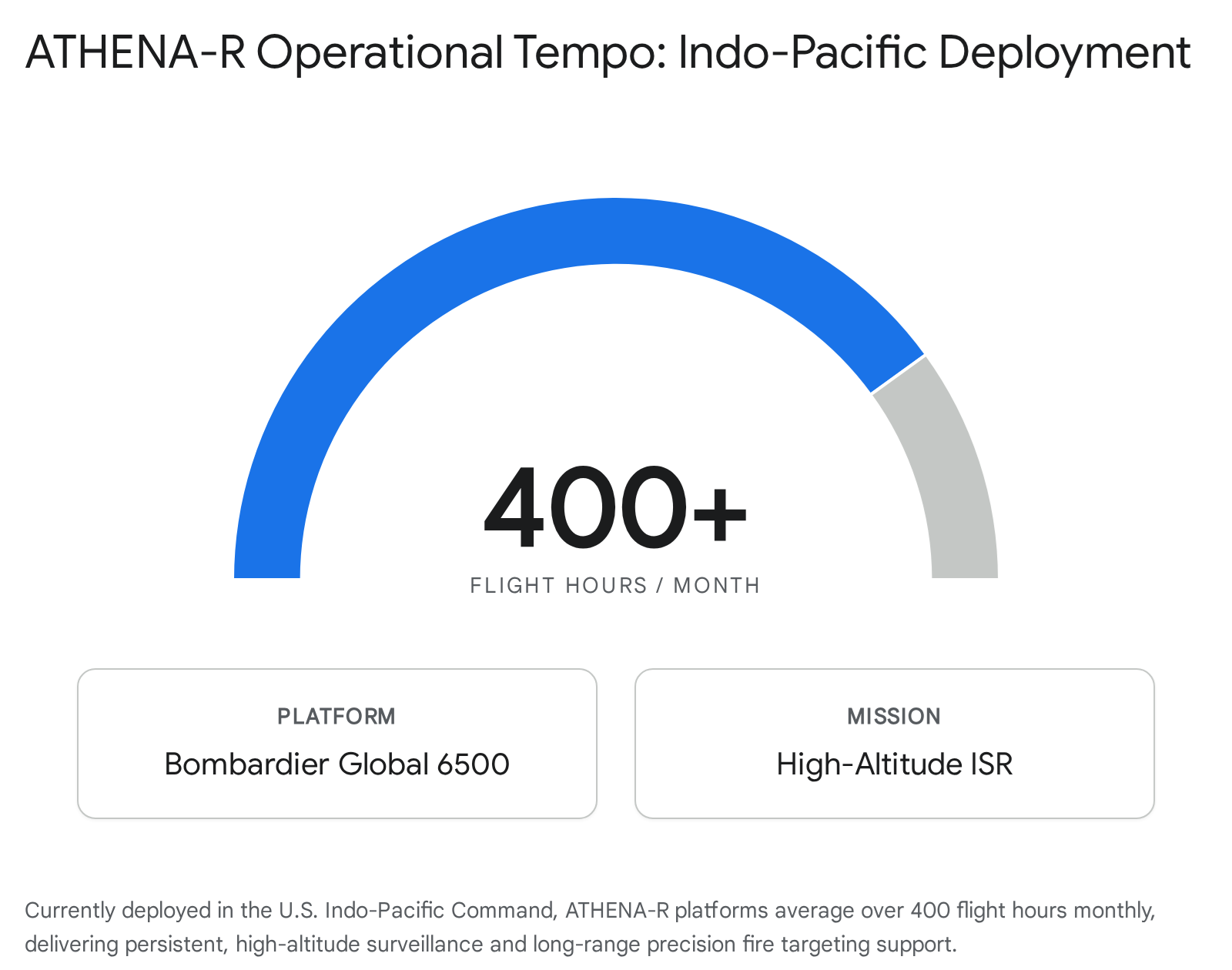
The United States Army recognized a critical vulnerability in its intelligence architecture: the pressing need to track targets deep within contested Anti-Access/Area Denial (A2/AD) environments without exposing platforms to sophisticated surface-to-air missile threats. To solve this, MAG Aerospace and L3Harris Technologies partnered to deliver the ATHENA-R capability on an expedited timeline. By utilizing a commercial-derivative business jet, the team bypassed the lengthy, multi-year developmental cycles typical of bespoke military aircraft. The resulting aircraft boasts an operational ceiling of up to 51,000 feet and an unrefueled endurance of 12 hours while carrying a 6,500-pound ISR and SIGINT Mission Equipment Package (MEP), allowing it to peer deep into adversary territory from safely within friendly airspace.
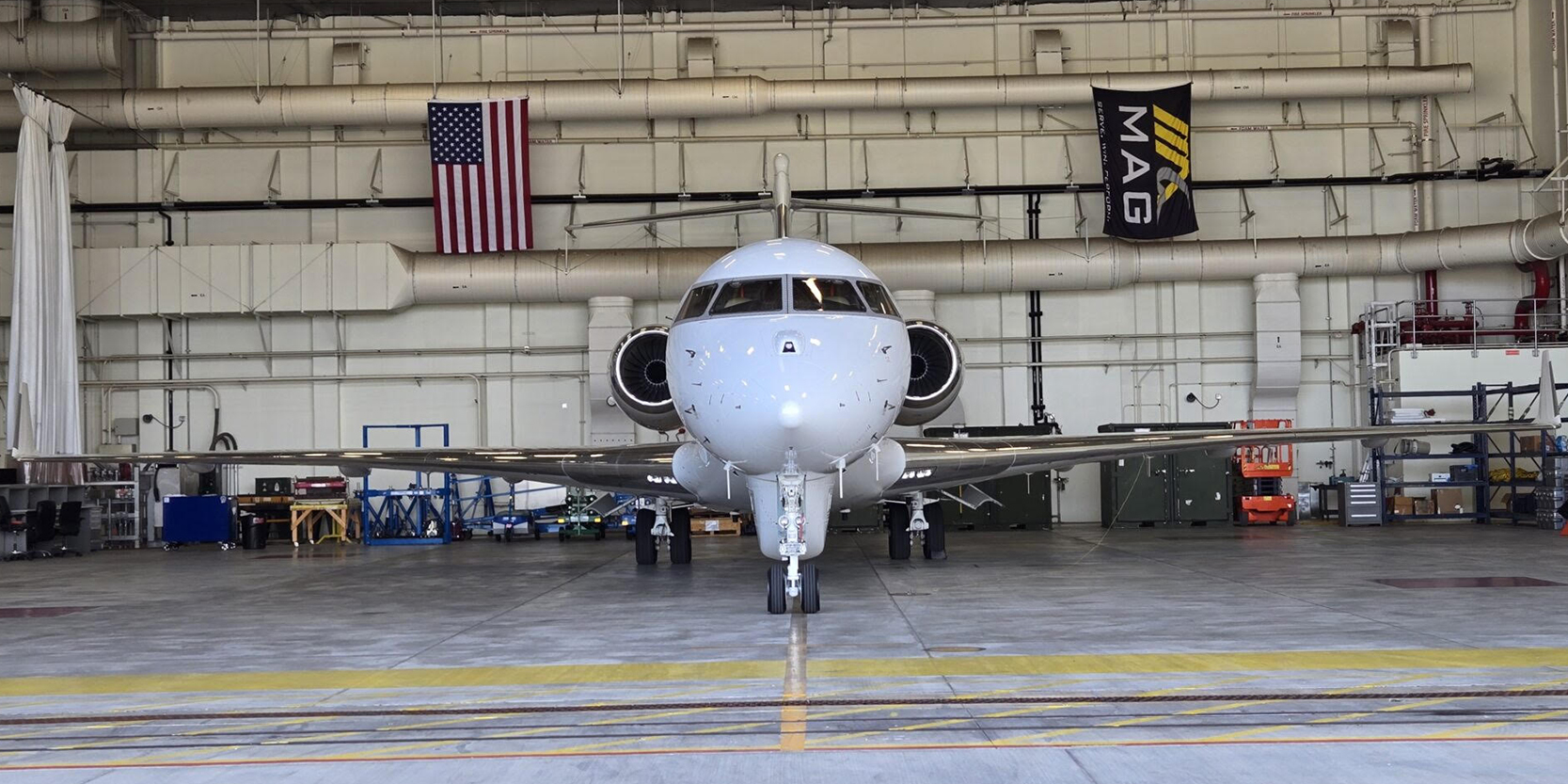
Operationally, the ATHENA-R platforms are achieving immense utilization rates. After successful deployments to INDOPACOM AOR, the aircraft are currently averaging more than 400 flight hours per month in the U.S. Indo-Pacific Command. The aircraft is heavily missionized, equipped with advanced radar and electronic communications intelligence capabilities under the Army’s Sensor Technology Operations and Readiness Maintenance contract. This equips the Army with targeting line-of-sight data critical for long-range precision fires (LRPF). As a bridging strategy toward the future High Accuracy Detection and Exploitation System (HADES), ATHENA-R proves that contractor-owned, contractor-operated (COCO) commercial jets can be rapidly transformed into affordable, highly survivable ISR solutions that meet urgent strategic demands.
How Does Aerial Reconnaissance Transform Wildfire Detection and Mapping?
Aerial reconnaissance transforms wildfire management by replacing reactive ground reporting with proactive, real-time thermal detection and high-resolution mapping. Operating specialized fleets equipped with optical and infrared sensors, organizations utilize instantaneous satellite data transmission to detect hundreds of initial wildfire starts, dramatically reducing the loss of life, property, and environmental damage.
In the civilian sector, the integration of advanced aerial reconnaissance has become a cornerstone of natural disaster mitigation. Historically, wildfire detection relied on localized watchtowers or delayed civilian reports. Today, specialized fleets, such as the Cessna 337s operated by MAG Aerospace Canada, patrol vulnerable regions with sophisticated EO/IR sensor suites. These aircraft maintain instantaneous communication with command centers via live satellite data transmission. The infrared capability is particularly critical; thermal anomalies can be detected through heavy smoke canopies long before the fire is visible to the naked eye.
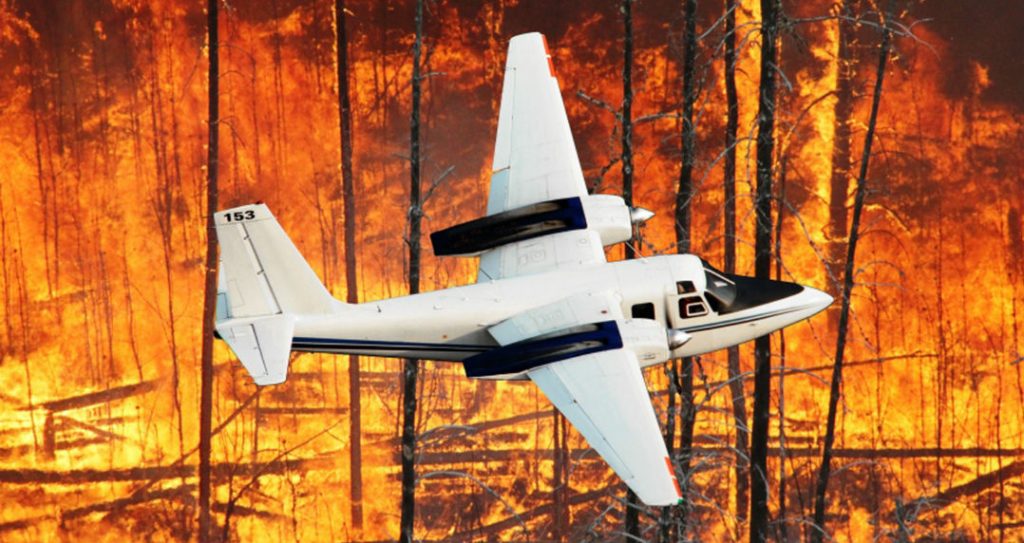
This early detection capability allows emergency management agencies to dispatch suppression assets to nascent fires before they escalate into uncontrollable conflagrations.
The data collected by these reconnaissance flights serves a dual purpose: immediate tactical suppression and long-term strategic mapping. Satellite and aerial data are visualized using metrics like Fire Radiative Power (FRP), which measures the intensity of active burning areas in megawatts. This intelligence was crucial during the 2025 fire season, where aerial and satellite monitoring tracked massive events like the 59,844-acre Lee Fire in Colorado. Furthermore, post-flight data feeds into predictive models and national databases, such as the LANDFIRE 2025 Update. By utilizing Harmonized Landsat Sentinel (HLS) data, the latest Cropland Data Layer (CDL), and AI-driven satellite change detection techniques, analysts can update vegetation and fuelbed maps, providing critical, up-to-date information ahead of future fire seasons. Emerging technologies are pushing this boundary further by integrating AI-based computer-vision solutions—such as those developed by Nuvis Technologies and Amplicam—that automate the monitoring of high-risk zones, allowing a single dispatcher to oversee thousands of square kilometers simultaneously.
How Do Non-Standard Platforms Support Specialty Aviation Solutions?
Specialty aviation solutions involve the engineering, integration, and operation of intelligence and communication payloads on non-standard aircraft platforms, tailoring commercial or civil airframes for specialized government, defense, or emergency response missions. This capability ensures that highly classified or unique operational requirements can be met even in the most challenging and austere environments.
The engineering demands of retrofitting non-standard platforms require deep expertise in avionics integration and aerodynamic certification. Defense contractors must seamlessly install complex systems—such as Aircraft Survivability Equipment (ASE), Communications Intelligence (COMINT) suites, and advanced Mission Management Systems—onto airframes that were not originally designed for such hardware. This involves major structural modifications, the installation of line-of-sight (LOS) and beyond-line-of-sight (BLOS) communication arrays, and rigorous adherence to Federal Aviation Administration (FAA) and military certification standards.
The utility of these modified non-standard platforms extends well beyond traditional military reconnaissance. In the civilian and homeland security sectors, specialized aviation solutions provide critical logistical and command-and-control support. For example, modified fixed-wing aircraft serve as prime assets for Federal Emergency Management Agency (FEMA) emergency response missions, acting as airborne communication nodes to restore connectivity over disaster zones where ground infrastructure has been destroyed. Similarly, these tailored platforms fulfill specialized charter requirements for law enforcement agencies, such as the United States Marshals Service, providing secure, rapidly deployable transport and surveillance capabilities that standard commercial charters cannot legally or technically accommodate.
What Are the Strategic Benefits of Modern Aerial Reconnaissance?
Modern aerial reconnaissance provides strategic decision-makers with zero-latency situational awareness, drastically lowering risks to human personnel while delivering high-resolution, multi-spectral intelligence over vast geographical areas faster than traditional ground-based collection methods.
The evolution of aerial reconnaissance has yielded several distinct, highly quantifiable operational benefits for both defense and civilian organizations:
- Personnel Risk Mitigation: The primary tactical advantage of aerial ISR is the separation of human intelligence gatherers from direct threats. By utilizing high-altitude manned platforms or unmanned systems with extended standoff ranges, intelligence is collected well outside the engagement envelopes of enemy fire, hazardous chemical spills, or active wildfire perimeters.
- High-Resolution Data Fidelity: Advancements in aircraft systems technology provide high-resolution imagery and topological data that ground teams cannot replicate. Multi-INT fusion allows commanders to peer through atmospheric obscurations, map out complex terrain features, identify obscured targets, and formulate fully-informed, precision operational plans.
- Accelerated Data Velocity: The speed of data collection and transmission is arguably the most critical factor in modern crises. The ability of modern ISR platforms to relay encrypted, high-bandwidth data in real-time establishes a decisive information advantage, proving invaluable in fast-moving battlefields and rapidly evolving natural disasters.
- Expansive Area Coverage: Airborne platforms equipped with modern sensor suites can monitor areas up to 40,000 square kilometers in a single sortie. This wide-area surveillance capability far exceeds the scope of ground reconnaissance or localized camera networks, allowing agencies to see more, collect higher quality data, and react to emergent threats across massive borders or exclusive economic zones within a fraction of the time.
Connect with MAG for more information about our services and capabilities, and let’s see how we can support you.
Frequently Asked Questions (FAQ)
1. What is the difference between tactical and strategic ISR? Tactical ISR provides immediate, highly localized intelligence directly to combat units or emergency responders to influence real-time, ground-level decisions, such as identifying an enemy ambush, locating a high-value target, or mapping an active fire line. Strategic ISR focuses on long-term, wide-area data collection intended for national-level policymakers and high-level commanders. This includes monitoring a foreign nation’s nuclear development, tracking global supply chain disruptions, or mapping large-scale geopolitical troop movements across international borders.
2. How are wildfires detected and mapped using aerial reconnaissance? Wildfires are mapped utilizing specialized aircraft equipped with Electro-Optical/Infra-Red (EO/IR) sensor suites. While visual cameras may be obscured by dense smoke, the infrared sensors detect thermal anomalies and heat signatures through the canopy. The aircraft utilize satellite communications to transmit this high-resolution thermal mapping data in real-time to ground commanders, allowing them to pinpoint the fire’s origin, predict its spread utilizing AI models, and allocate suppression resources effectively before the fire escalates.
3. What is the payload capacity and endurance of the MC-208 Guardian? The MC-208 Guardian has a maximum take-off weight of 4,110kg and features four OEM-certified wing-mounted external load hardpoint pylons, each capable of carrying up to 227kg of munitions, sensors, or suspension equipment. It holds an internal fuel capacity of 1,018kg, providing over six hours of continuous endurance, which can be extended by an additional 1.5 hours with an optional auxiliary fuel tank. Furthermore, the spacious cabin can accommodate up to nine personnel, including a two-person crew.
4. Why are commercial business jets being used for military ISR missions? Commercial business jets, such as the Bombardier Global 6500 utilized in the ATHENA-R program, offer exceptional high-altitude performance (up to 51,000 feet), extended unrefueled range (over 12 hours), and heavy payload capacities at a fraction of the development cost and time required to engineer purpose-built military aircraft from scratch. They can be heavily “missionized” with advanced active radars and passive SIGINT equipment, providing an immediate, affordable, and highly survivable solution to bridge critical intelligence gaps in contested environments.
5. What role does AI play in reducing analyst workload in modern ISR? AI algorithms deployed directly on ISR platforms (edge computing) or at ground stations process massive datasets—such as hours of full-motion video footage or complex radar returns—autonomously detecting anomalies, identifying target signatures, and filtering out irrelevant data. This automation reduces data processing cycles by up to 60%, alleviating extreme cognitive load and allowing human analysts to focus on high-level strategic interpretation and decision governance (Authentic Intelligence) rather than mundane data sorting.
Originally published September 2023
Updated April 2026
