
Originally published July 2025
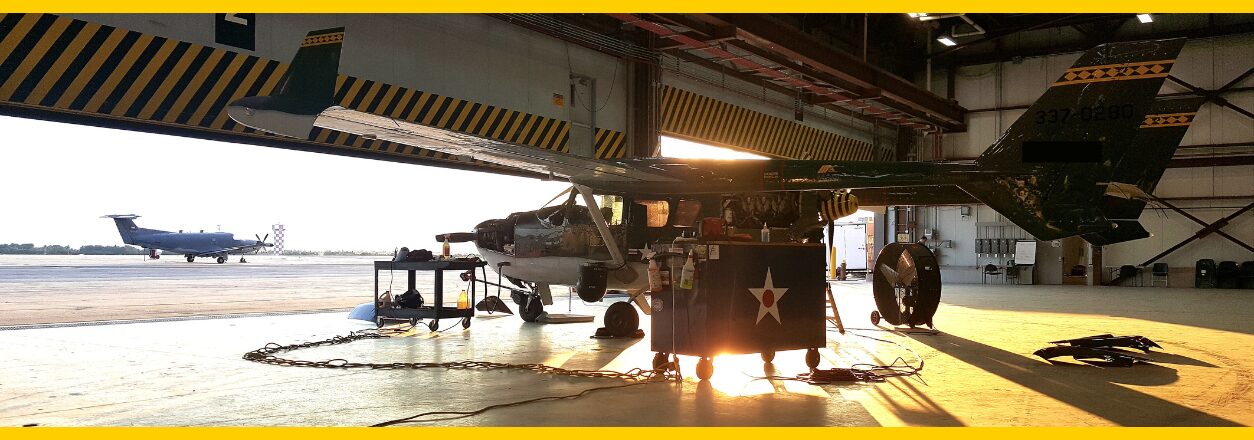
MAG’s Florida Technology Integration & Interoperability Innovation Center in Titusville, FL – Space Coast Regional Airport (KTIX)
In the rapidly evolving aerospace and defense industry, MAG’s Titusville, Florida facility stands out as a pinnacle of innovation, technological advancement, and manufacturing excellence. This state-of-the-art facility with over 15 years of experience supporting the design, modification, integration, testing, and certification of ISR platforms, is prominently located in the heart of the Space Coast, is a testament to MAG’s commitment to pushing the boundaries of what’s possible in technology.
Titusville, FL – Space Coast Regional Airport (KTIX)
- 50,000 ft² Technology Integration Area
- 6,500 ft² Engineering / Design / Lab / SIL
- 2,500 ft² Research and Development
- 12,000 ft² Manufacturing / Machining / Kitting
- 20,000 ft² Aircraft Integration / Training / Maintenance
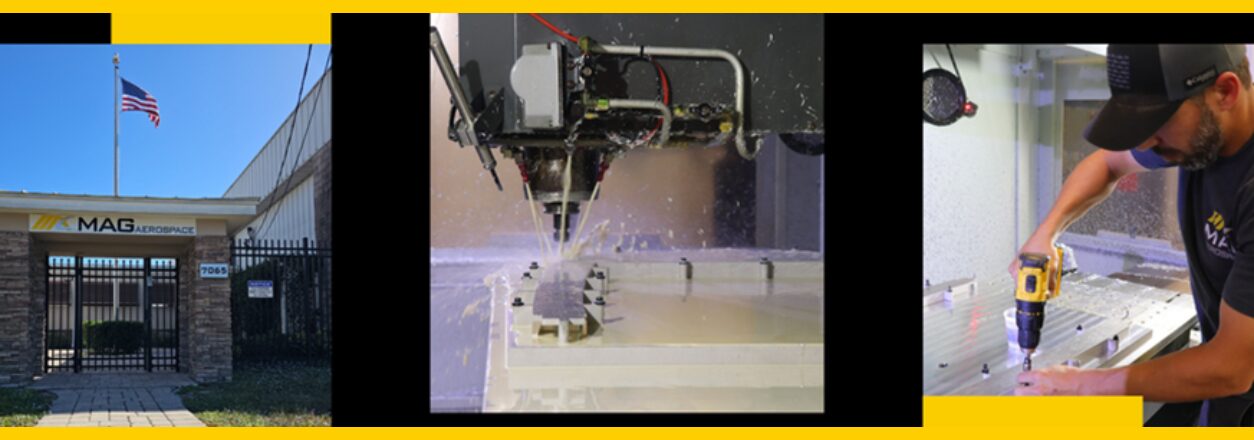
- Machining Capability: Waterjet, CNC machines and FAA approved 3D printer
- 8,000 ft² Main Office
- AS9100D & ISO 9001:2015 Quality Management System
- FAA Part 145 Repair Station
- FAA Parts Manufacturer Approval (PMA)
- FAA/MILSTD/AS9100 Design Practices
- ANSI/IEEE/MIL-rapid prototyping engineering change process Class I & II TD-100 Drawing Practices
- 35+ active FAA Supplemental Type certificates (STCs)
- CMMI Level 3 and PMP‑certified methodologies for:
- Project planning and scheduling.
- Resource allocation and acquisition support.
- Quality assurance and risk management.
A Hub of Manufacturing and Technological Excellence
Equipped with advanced precision machining equipment, state-of-the-art sheet metal fabrication tools, and facilities for complex assembly and integration, the facility excels in producing ultra-precise components essential for aerospace applications. From CNC lathes and mills to advanced laser cutters and a versatile water cutter, the specialized equipment and highly skilled personnel at the Titusville facility underscores MAG’s ability to handle complex innovation and technology challenges with unmatched efficiency and accuracy.
How Does the Titusville Technology Integration Innovation Center Accelerate Defense Manufacturing?
MAG Aerospace’s Titusville, Florida facility is a 50,000-square-foot advanced manufacturing and engineering hub dedicated to airborne ISR modifications. By centralizing systems engineering, rapid prototyping (via waterjet, CNC, and FAA-approved 3D printing), and direct flight-line aircraft integration, the facility eliminates supply chain friction and drastically accelerates the deployment of specialized multi-role defense platforms.
Strategic Infrastructure and Organic Engineering
Situated prominently at the Space Coast Regional Airport (KTIX), the MAG Aerospace Technology Integration & Interoperability Innovation Center stands as a testament to modern aerospace manufacturing efficiency. With over 15 years of institutional experience supporting the design, modification, integration, testing, and certification of ISR platforms, the facility is purpose-built to execute the end-to-end modernization of complex airborne fleets. The fundamental advantage of this center lies in its vertical integration; by housing organic engineering, physical fabrication, and active flight line operations under a single roof, MAG Aerospace effectively neutralizes the severe supply chain delays and logistical bottlenecks that typically plague fragmented defense integration efforts.
The spatial configuration of the 50,000-square-foot innovation center is meticulously optimized for workflow efficiency, operational security, and the rapid translation of digital designs into physical airborne reality. The facility is strategically partitioned into specialized zones that support a contiguous lifecycle of aerospace modification:
- Aircraft Integration, Training, and Maintenance: 20,000 sq. ft. providing direct flight line access, allowing engineers to perform seamless hardware insertions, radome installations, and immediate flight testing.
- Manufacturing, Machining, and Kitting: 12,000 sq. ft. housing advanced precision machining equipment required to fabricate bespoke aeronautical components.
- Main Office Operations: 8,000 sq. ft. dedicated to project planning, scheduling, and resource allocation under PMP-certified methodologies.
- Engineering, Design, Lab, and System Integration Lab (SIL): 6,500 sq. ft. dedicated to developing complex hardware and software architectures, including electrical engineering for digital backbones.
- Research and Development (R&D): 2,500 sq. ft. facilitating rapid iteration, experimentation, and future-proofing of defense technologies.
Advanced Fabrication and Rapid Prototyping Tolerances
Technical progression in modern defense architectures relies comprehensively on rapid prototyping to counter emerging global threats and to compress the notoriously slow defense acquisition cycle. The Titusville facility is equipped with state-of-the-art sheet metal fabrication tools, advanced laser cutters, versatile waterjet cutters, and Computer Numerical Control (CNC) lathes and mills. The utilization of waterjet cutting is particularly critical in aerospace manufacturing; unlike laser or plasma cutting, waterjets do not create a Heat-Affected Zone (HAZ), thereby preserving the absolute metallurgical and structural integrity of the aerospace-grade aluminum and titanium alloys used in external sensor mounts and airframe reinforcements.
The presence of an FAA-approved 3D printer further enhances the rapid prototyping process, allowing organic engineering teams to design, print, fit-check, and iterate capabilities physically before committing to full-scale, expensive subtractive manufacturing. This in-house capability is essential for generating custom ISR sensor mounts, specialized airborne sensor operator consoles, and integrating complex defensive systems, armor, and covert lighting systems. The ability to handle these complex innovation challenges under one roof ensures that the ultra-precise tolerances required for aerodynamic stability and optimal sensor alignment are meticulously maintained, ensuring the modified platform performs exactly as modeled in the digital environment.
The Phased Execution Framework
The methodology applied at the Titusville facility is not ad-hoc; it follows a rigorous, requirements-driven process utilizing Capability Maturity Model Integration (CMMI) Level 3 and Project Management Professional (PMP) certified methodologies. This strict adherence guarantees flawless execution in project planning, scheduling, resource allocation, quality assurance, and risk management. The technical approach is structured to leverage relevant experience while enforcing industry standards and certified production processes throughout every phase of the platform’s evolution.
|
Phase of Technology Integration |
MAG Aerospace Engineering Execution Strategy |
| Phase 1: Systems Engineering & Modeling | Designing bespoke hardware and software architectures, including mechanical and electrical engineering design specifically tailored for aeronautical programs to ensure payload compatibility without exceeding SWaP-C limits. |
| Phase 2: Rapid Prototyping | Utilizing the dedicated innovation center to physically test and iterate capabilities (via 3D printing and CNC machining) prior to full-scale manufacturing, ensuring rapid, risk-free technology insertion. |
| Phase 3: Aircraft Integration & Modification | Executing the physical installation of multi-spectral EO/IR sensors, digital processing backbones, secure communication relays, and electronic warfare countermeasures on diverse defense platforms. |
| Phase 4: Testing, Certification & MRO | Achieving rigorous airworthiness standards, securing FAA STC approvals through comprehensive flight testing, and providing ongoing, global Maintenance, Repair, and Overhaul (MRO) support. |
This comprehensive operational framework enables MAG Aerospace to go beyond merely enhancing equipment; it fundamentally modernizes aging fleets, providing critical technology upgrades that significantly enhance the capabilities and extend the operational lifespan of vital defense assets. Timely, cost-effective, and deeply reliable execution are the hallmarks of this localized manufacturing approach, making it a highly valued asset for defense clients across the globe.
Why is Regulatory Compliance (FAA STC, AS9100D) Crucial for ISR Modifications?
Regulatory certifications such as AS9100D, ISO 9001:2015, and FAA Part 145 are critical for ensuring that highly complex aerospace modifications meet absolute safety, quality, and performance criteria. Securing FAA Supplemental Type Certificates (STCs) guarantees that the integration of heavy external radomes, multi-spectral sensors, and internal operator consoles does not compromise the structural integrity or aerodynamic airworthiness of the platform.
Traceability and Quality Management in Defense Supply Chains
In the highly sensitive environment of aerospace defense manufacturing, where structural failures or electrical anomalies can result in catastrophic loss of life and mission failure, deterministic quality assurance is non-negotiable. The Department of Defense and allied commercial operators require absolute visibility into the origin, handling, and installation of every single component utilized in an aircraft modification. To meet this uncompromising standard, the Titusville facility operates under AS9100D and ISO 9001:2015 Quality Management Systems.
The AS9100D standard is a specialized quality management framework specifically designed for the aviation, space, and defense industries. It expands significantly upon standard ISO 9001 requirements by integrating strict mandates for product safety, the prevention of counterfeit parts, configuration management, and comprehensive supply chain traceability. This standard defines the quality management system requirements to be used at all levels of the supply chain by suppliers from all around the globe. For a defense procurement officer researching potential integration partners, verifiable AS9100D compliance acts as the primary filter for eliminating unverified vendors. It provides the empirical evidence required to prove that the integrator can consistently deliver high-quality, reliable solutions that adhere to statutory and regulatory requirements, thereby effectively mitigating massive operational risks.
Navigating the FAA Certification Authority
Modifying an aircraft to carry external payloads, such as high-drag SATCOM radomes, heavy EO/IR sensor turrets, or internal mission operator consoles, fundamentally alters the baseline physics of the airframe. These modifications change the aerodynamic profile, shift the center of gravity, alter the weight distribution, and place unprecedented loads on the aircraft’s electrical generation systems. To legally, safely, and operationally fly modified platforms, aerospace engineering firms must master the highly complex Federal Aviation Administration (FAA) certification matrix.
MAG Aerospace operates as a certified FAA Part 145 Repair Station and holds FAA Parts Manufacturer Approval (PMA). The Part 145 certification is a critical operational designation; it authorizes the facility to perform specific maintenance, repair, and complex alterations on aircraft, providing customers with absolute confidence in the certified airworthiness of their assets. The PMA allows the facility to manufacture replacement and modification parts that comply strictly with FAA regulations. Furthermore, the engineering teams employ sophisticated FAA, MIL-STD, and AS9100 design practices, including ANSI/IEEE/MIL-rapid prototyping engineering change processes (Class I & II) and TD-100 drawing practices to ensure that every structural change is meticulously documented and mathematically verified.
The Strategic Value of the Supplemental Type Certificate (STC)
The culmination of these exhaustive engineering and regulatory efforts is the attainment of a Supplemental Type Certificate (STC). Issued directly by the FAA, an STC is the definitive regulatory approval demonstrating that a specific modification, alteration, or addition to an existing airframe conforms to all stringent safety and structural standards without invalidating the aircraft’s original type certification. Securing an STC requires a grueling process of engineering modeling, ground testing, and comprehensive flight testing to prove aerodynamic stability and electrical compatibility, often aligning with standards like RTCA DO-178B for software considerations in airborne systems.
MAG Aerospace actively maintains and manages over 35 active FAA Supplemental Type Certificates. This metric is highly significant; it proves a sustained, institutionalized capability to engineer, test, document, and certify complex modifications repeatedly and successfully. By possessing this organic design and certification expertise within the same facility that physically manufactures the parts, the Titusville center dramatically reduces the timeline required to field new operational capabilities. This regulatory approval is essential for the widespread adoption of MAG’s innovations, providing global customers with the ultimate confidence that their aircraft modifications are both tactically effective and perfectly compliant with global aviation standards.
The Impact: More Than Just a Facility
MAG Titusville’s impact extends far beyond its physical walls, playing a crucial role in:
Modernizing fleets: By providing cutting-edge solutions and upgrades, MAG provides technology upgrades on platforms to enhance their capabilities and extend the lifespan of their assets.
Enhancing equipment: From performance improvements to safety upgrades, MAG’s expertise ensures aircraft are operating at their peak potential.
Delivering high-quality solutions: Timely, cost-effective, and reliable – these are the hallmarks of MAG’s services, valued by clients across the globe.
Technical Approach:
- Requirements Driven Process
- Leverage Relevant Experience
- Organic Engineering, Design, and Certification Expertise
- In-house Prototyping, Manufacturing, and Fabrication Capability
- Onsite Waterjet, CNC machines and FAA approved 3D printer
- Onsite Material Control and Procurement
- Industry Standards and Certified Production Processes
MAG is at the forefront of developing innovative solutions to enhance the operational capabilities of aircraft as evident by MAG’s in-house engineered, built and FAA approved Universal Adapter Plate (UAP). MAG has identified a gap in the Beyond Line of Sign (BLOS) antenna market, specifically the mounting plate. Currently, there is no reasonable mounting plate capabilities, and all engineering efforts are focused on the development of the antennas and the networking. This adaptability is crucial for military where the ability to quickly adapt to different missions or operational requirements is invaluable. In parallel, MAG’s efforts to secure a Supplemental Type Certificate (STC), issued by the FAA, for our UAP demonstrates our commitment to safety and regulatory compliance. MAG ensures our modifications, including the installation of a UAP, meet strict safety and performance criteria. This regulatory approval is essential for the widespread adoption of MAG’s innovations, providing customers with the confidence that their aircraft modifications are both safe and compliant with aviation standards.
How Does the Universal Adapter Plate (UAP) Solve Airborne SATCOM Integration Challenges?
The Universal Adapter Plate (UAP) is an FAA-certified, modular mounting solution engineered by MAG Aerospace that bridges a critical physical gap in the airborne SATCOM market. By standardizing the interface between the aircraft fuselage and the antenna radome, the UAP eliminates costly re-engineering, allowing for the rapid integration and upgrading of broadband satellite communication systems necessary for real-time tactical intelligence.
Identifying the Antenna Mounting Bottleneck
In the data-heavy environment of 2026 defense operations, airborne intelligence is fundamentally constrained by bandwidth. The ability to transmit immense volumes of data—including 4K/8K full-motion video, dense signals intelligence, and joint-force command networking—relies entirely on Beyond Line of Sight (BLOS) satellite architectures. While the global airborne SATCOM market is experiencing explosive growth, a highly specific physical bottleneck has severely limited operational agility.
Historically, aerospace engineering and capital investment have concentrated almost exclusively on the internal development of the antennas themselves—specifically advanced Electronically Steered Antennas (ESAs)—and the complex software networking protocols required to connect them to low earth orbit (LEO) or geostationary constellations. However, the physical integration of these diverse, heavy, and aerodynamically sensitive antennas onto the exterior of aircraft fuselages was largely neglected. There was a distinct lack of standardized, reasonable mounting plate capabilities. Consequently, every time an operator needed to upgrade an antenna or switch to a different SATCOM provider, they were forced to endure a lengthy, customized Non-Recurring Engineering (NRE) process, complete with new aerodynamic load analyses, structural fuselage reinforcements, and fresh FAA certification battles.
The UAP Solution: Modularity and Flight Validation
To resolve this critical industry friction, MAG Aerospace engineered the Universal Adapter Plate (UAP). Designed and manufactured entirely in-house at the Titusville innovation center, the UAP provides a standardized, modular, and FAA-certified physical interface between the aircraft fuselage and the exterior SATCOM radome. This structural adaptability is paramount for military and special operations forces, where the ability to quickly adapt platforms to different missions, constellations, or operational theaters without grounding the aircraft for months is an invaluable tactical advantage. By standardizing the physical mounting footprint, the modular MAG satellite communications equipment drastically saves customers time and money, enabling the rapid upgrading of new antenna technologies directly into airborne SATCOM architectures.
The structural integrity and operational efficacy of the UAP were rigorously tested and definitively validated on the MC-208 Guardian platform in a high-profile collaboration with Gogo Business Aviation and Gilat Satellite Networks. During a comprehensive flight test campaign, the UAP securely housed the advanced Gogo Plane Simple® ESA during five demanding sorties totaling ten hours of flight time. To prove aerodynamic resilience, the aircraft executed aggressive maneuvers that placed significant sheer and load stresses on the mounting plate, including standard taxi, take-off, racetrack holding patterns, complex figure-eight patterns, steep ascent/descent profiles, and hard bank movements up to 30 degrees.
Supported by the unyielding structural integrity of the UAP, the full-duplex ESA maintained stable, gate-to-gate connections with the Eutelsat OneWeb constellation. The system flawlessly supported simultaneous, high-bandwidth applications throughout the rigorous flight profiles. Test engineers successfully executed 8K video streaming (via platforms like Netflix and YouTube), Teams video conferencing, WhatsApp video calls, email transmissions, OneDrive syncing, and secure corporate VPN access simultaneously for multiple passengers. This flawless performance categorically proves the viability of the UAP-mounted ESA for the most demanding mission requirements of VVIP, head-of-state, government, and special missions operators.
Crucially, in parallel with its development, MAG Aerospace proactively secured FAA Supplemental Type Certificates (STCs) for the UAP. This proactive regulatory approval guarantees that the installation of the UAP meets strict aviation safety, structural, and aerodynamic performance criteria. It provides operators and defense procurement agencies with absolute confidence that their BLOS modifications are not only technologically cutting-edge but fully compliant with rigid global aviation standards, paving the way for widespread, rapid adoption.
What Multi-Role Capabilities Does the MC-208 Guardian Provide for Austere Operations?
The MC-208 Guardian is a highly versatile, multi-role tactical aircraft built upon the reliable Cessna Caravan 208 baseline. Engineered by MAG Aerospace, it eliminates the need for expensive, single-purpose airframes by seamlessly executing ISR, precision strike, air mobility, and medical evacuation (MEDEVAC) missions in resource-constrained and austere environments without requiring physical hangar reconfiguration.
“We designed the MC-208 Guardian to solve the toughest problems and protect troops on the ground even in the most austere environment. From ease of flight training and deployment, to the aircraft’s small logistical footprint, low cost, and aircrew friendly operations, the MC-208 Guardian delivers unmatched military might for the size and cost of the platform.” – Joe Fluet | MAG’s Executive Chairman of the Board
The Eradication of Single-Mission Limitations
Historically, defense aviation and security forces relied heavily on specialized, single-purpose airframes to accomplish distinct tactical objectives. An organization would procure one fleet of aircraft exclusively for airborne surveillance, a separate fleet for close air support, and yet another for cargo transport or casualty evacuation. This fragmented approach requires massive capital expenditure, distinct training pipelines for aircrews and mechanics, and complex, overlapping logistics tails. As the Military Services adjust to meeting the demands of the modern U.S. National Defense Strategy, low-cost, highly sustainable, and true multi-role platforms have become a critical pivot point for future force posture.
Special Missions Modifications:
- Airborne ISR
- Custom ISR Sensor Mounts
- Airborne Sensor Operator Console
- Communications Systems and Datalinks
- Defensive Systems and Armor
- NVIS and Covert Lighting
- Precision Strike
- AGM-114K/R
- Guided & Unguided Rockets
- Common Launch Tube munitions
- Air Mobility
- VIP / Passenger Transport
- Cargo Roller Floor / Air Operable Roll-up Door
- Cargo / Personnel Airdrop
- Air Ambulance / CASEVAC/ MEDEVAC
MAG Aerospace identified this severe operational and fiscal gap and developed a proprietary, fully integrated solution: the MC-208 Guardian. Unveiled as a true force multiplier, the MC-208 Guardian brings together every aspect of the company’s engineering expertise—from initial systems development to final deployment—to present a proven, reliable, and versatile aircraft that actively adapts to the dynamic needs of the warfighter.
The Tactical Advantage of the Cessna Caravan Baseline
The foundation of the MC-208 Guardian is the globally ubiquitous and proven Cessna Caravan 208. Leveraging a widely certified commercial derivative aircraft provides immediate logistical advantages. The Caravan is renowned for its extreme ruggedness, high dispatch reliability, and its exceptional ability to operate from short, unimproved, dirt, or gravel airstrips in some of the most austere environments on the planet. Its high-wing design offers ideal downward visibility for sensor operation and provides necessary ground clearance for underwing armaments on unpaved surfaces. Furthermore, because the baseline airframe is used globally, spare parts, maintenance networks, and mature training programs are readily available worldwide, drastically reducing total system acquisition and sustainment costs.
Seamless Multi-Domain Configurations
What distinguishes the MC-208 Guardian from a standard utility aircraft is the intensive suite of tactical modifications executed at MAG’s Titusville facility. The core philosophy behind the Guardian’s engineering is that it must remain mission-ready for vastly different operational profiles simultaneously, entirely eliminating the need for time-consuming and labor-intensive hangar reconfigurations. This multi-role capacity allows a single airframe to support a wide range of mission sets:
|
Tactical Mission Set |
MC-208 Guardian Integrated Capabilities |
| Intelligence, Surveillance, and Reconnaissance (ISR) | Outfitted with advanced, high-definition Electro-Optical/Infrared (EO/IR) sensors, digital video routing architectures, and secure beyond-line-of-sight communications to provide real-time battlefield intelligence and strike coordination. |
| Precision Strike / Armed Reconnaissance | Structurally reinforced and wired to deploy lethal, precision-guided munitions, including AGM-114K/R Hellfire missiles, guided and unguided rockets, and Common Launch Tube (CLT) munitions for immediate close air support. |
| Air Mobility / Non-Standard Aviation | Configured for rapid VIP/passenger transport, troop deployment, and cargo operations via an internal roller floor and an air-operable roll-up door, enabling precision cargo and personnel airdrops. |
| Air Ambulance / CASEVAC / MEDEVAC | Fully equipped to rapidly extract wounded personnel from austere combat zones, featuring integrated oxygen systems, life-support monitoring equipment, and modular medical litters. |
To ensure maximum survivability in hostile and politically sensitive airspace, the MC-208 Guardian integrates robust defensive systems and armor, comprehensive Night Vision Imaging System (NVIS) cockpit conversions, and covert exterior lighting. Fully compliant with the Buy American Act, MAG Aerospace has ensured that components and modifications are manufactured domestically, supporting the U.S. defense industrial base while delivering a decisive, operation-focused capability to Special Operations Forces globally.
Experience and Past Performance
- US Government Programs
- Foreign Military Sales
- Direct Commercial Sales
- Contracted Logistical Support
Learn more about MC208 Guardian: MC-208 Guardian from MAG Aerospace
Conclusion: The Forefront of Aerospace Excellence
MAG is not just meeting the evolving needs of the industry— we are actively shaping the future. MAG’s ASO9100D certification ensures adequate levels of quality and customer satisfaction in the aviation, space, and defense industries. This standard defines the quality management system requirements to be used at all levels of the supply chain by suppliers from all around the globe.
As global threats diversify and defense budgets require maximized efficiency, the traditional boundaries of aircraft manufacturing and modification are being fundamentally rewritten. The comprehensive analysis of current market data, procurement trends, and manufacturing capabilities indicates that MAG Aerospace’s Technology Integration & Interoperability Innovation Center in Titusville, Florida, operates as a premier, localized hub for modern aerospace engineering.
By vertically integrating advanced systems design, rapid prototyping, precision fabrication, and rigorous FAA/AS9100D certification processes under one roof, the facility provides highly secure, risk-mitigated pathways for modernizing critical defense fleets. Proprietary innovations such as the Universal Adapter Plate (UAP) solve debilitating, long-standing bottlenecks in Beyond Line of Sight (BLOS) tactical communications, enabling the seamless, modular integration of advanced SATCOM systems. Simultaneously, the MC-208 Guardian definitively proves that austere, multi-domain operations no longer require specialized, single-mission airframes; true multi-role lethality and ISR capability can be achieved through intelligent, ruggedized engineering. Supported by the exponential economic vitality and unmatched workforce of the Florida Space Coast, the Titusville facility stands not merely as a high-tech manufacturing center, but as a vital strategic asset actively shaping the future of global defense interoperability and readiness.
Contact MAG today to learn more about how we can elevate your missions. Reach out now to schedule a demo and take the first step in revolutionizing your operations.
Frequently Asked Questions (FAQ)
1. What is an FAA Supplemental Type Certificate (STC), and why is it absolutely necessary for defense aircraft? A Supplemental Type Certificate (STC) is a formal approval document issued by the Federal Aviation Administration (FAA) indicating that a major modification or alteration to an aircraft meets all stringent safety, structural, and performance regulations. It is legally required whenever an aircraft’s original type design is fundamentally changed—such as installing heavy external EO/IR sensor mounts, cutting the fuselage to accommodate a BLOS SATCOM radome, or integrating complex internal operator consoles. STCs are essential to legally and safely fly modified platforms, ensuring the alteration does not degrade the aircraft’s aerodynamic stability or overload its electrical generation systems.
2. How does the Universal Adapter Plate (UAP) specifically reduce costs and timelines for airborne SATCOM integration? Prior to the invention of the UAP, installing a new Beyond Line of Sight (BLOS) antenna required bespoke engineering and manufacturing for the physical mounting plate every single time the hardware changed. This resulted in exceptionally high Non-Recurring Engineering (NRE) costs and months of grounded aircraft time. The UAP solves this by providing a standardized, FAA-certified physical interface between the aircraft fuselage and the antenna radome. This modularity allows operators to rapidly swap or upgrade to new Electronically Steered Antennas (ESAs) without having to re-engineer or re-certify the physical fuselage mount, saving massive amounts of capital and deployment time.
3. What are the primary tactical missions of the MC-208 Guardian? The MC-208 Guardian is a highly versatile, multi-role tactical aircraft built upon the proven Cessna Caravan 208 platform. Its primary mission profiles include Intelligence, Surveillance, and Reconnaissance (ISR) utilizing HD sensors and datalinks; close air support and precision strike utilizing AGM-114K/R Hellfire missiles and Common Launch Tube (CLT) munitions; air mobility for cargo airdrop and VIP transport; and medical/casualty evacuation (MEDEVAC/CASEVAC). Crucially, it is engineered to perform these distinct, complex missions in austere environments without requiring physical hangar reconfiguration between sorties.
4. Why is AS9100D certification considered a non-negotiable requirement for modern defense manufacturing? AS9100D is the internationally recognized Quality Management System standard developed specifically for the aviation, space, and defense industries. It expands significantly upon standard ISO 9001 baseline requirements by adding strict, industry-specific mandates for product safety, counterfeit parts prevention, rigorous configuration management, and end-to-end supply chain traceability. Procurement agencies mandate AS9100D certification to mathematically ensure that suppliers can execute highly complex aerospace modifications with zero defect tolerance, mitigating the massive risks associated with flight component failures.
5. What specific advanced manufacturing capabilities exist at the MAG Aerospace Titusville Innovation Center? The 50,000-square-foot facility is fully equipped with comprehensive, tight-tolerance fabrication tools. This includes advanced precision Computer Numerical Control (CNC) lathes and mills, state-of-the-art sheet metal fabrication tools, precision laser cutters, versatile waterjet cutters (which preserve the metallurgical integrity of aerospace alloys by avoiding heat-affected zones), and FAA-approved 3D printers for rapid prototyping and kitting.
6. What is the operational value of holding an FAA Part 145 Repair Station certification? An FAA Part 145 certification officially designates a facility as a federally approved repair station. This grants the facility the legal authority to perform specific maintenance, highly complex alterations, and rigorous inspections on aircraft and officially return them to service. For an integration center like Titusville, holding this certificate means that structural modifications, scheduled maintenance, and final airworthiness verifications can be completed entirely in-house on the flight line, significantly accelerating deployment timelines for critical defense assets.
Updated March 2026
